
How to identify a Japanese first-print manga
First edition or first printing? Learn to read colophons through real photographs, identify obi variants and check inserts and reprints before buying.
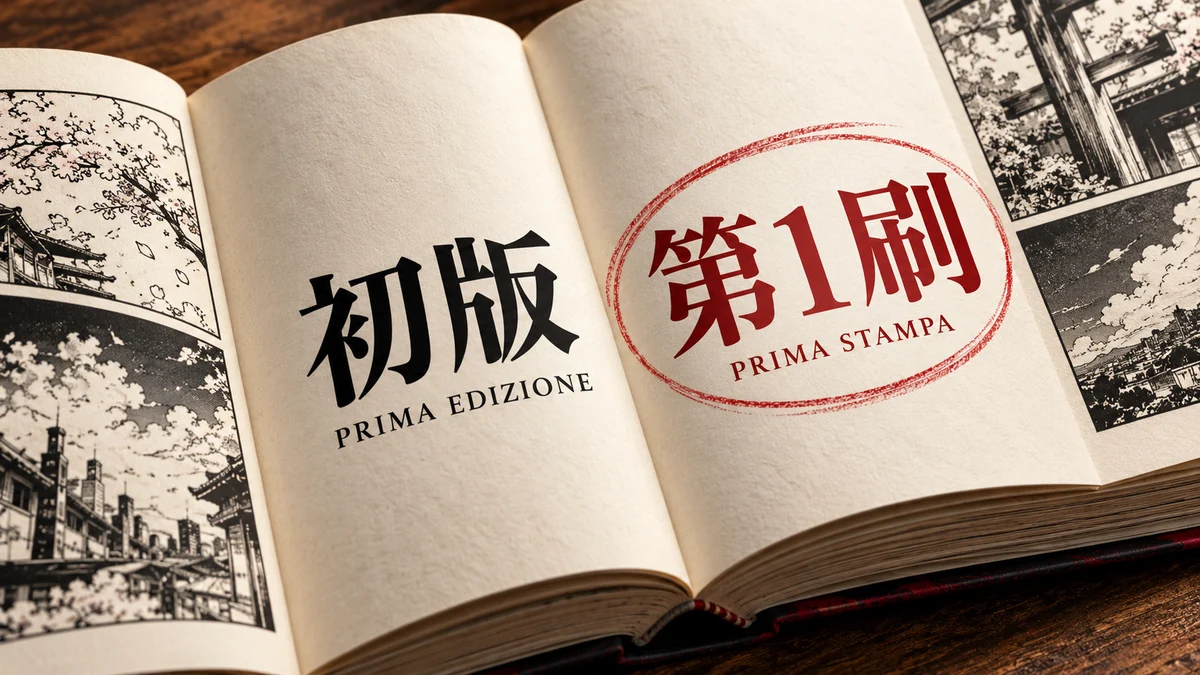
You find a volume you have wanted for years. The cover looks right, the listing says “first edition” and the obi matches the one you recognise. Before discussing the price, ask for one photograph: the complete, readable colophon. That is where you start to identify the actual copy.
This guide focuses on Japanese tankōbon. We use archive photographs to read the wording, recognise a reprint and check what comes with the book. Open any photograph to enlarge it, then follow the link to the volume dossier.
Which edition?
The original, a new imprint, a kanzenban? Identify the publication you want to collect first.
Which print run?
The first production of that edition, or a later run? This is where you need the colophon.
Which accessories?
The correct obi, an intact coupon and loose inserts: separate checks on the same copy.
“First edition”
does not settle the question.
A manga can remain in its first edition across many print runs. The first printing is the initial production of that particular edition; when more copies are printed, they are reprints. The story, cover and even ISBN can stay identical. Shōgakukan explains this distinction through the characters 版 and 刷. [1]
A new edition can change the imprint, format or presentation and have a first printing of its own. “Volume 1, first printing” is therefore incomplete unless you know which edition is being described.
A real example: the two Vinland Saga editions
The original 2005 line stops at volume 2. After serialisation moves to Monthly Afternoon, the first two volumes are republished under the Afternoon KC imprint in 2006. The red and blue volume 1 covers belong to different editions, each with its own printing history. They have separate archive dossiers and price records.
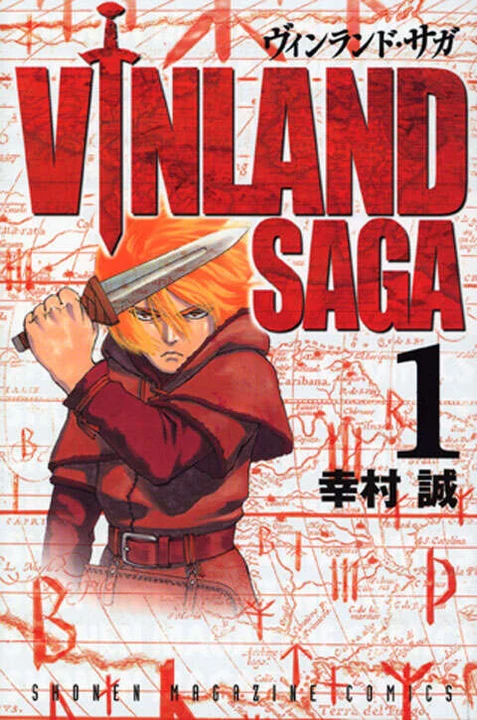
Shōnen Magazine Comics
The original line.
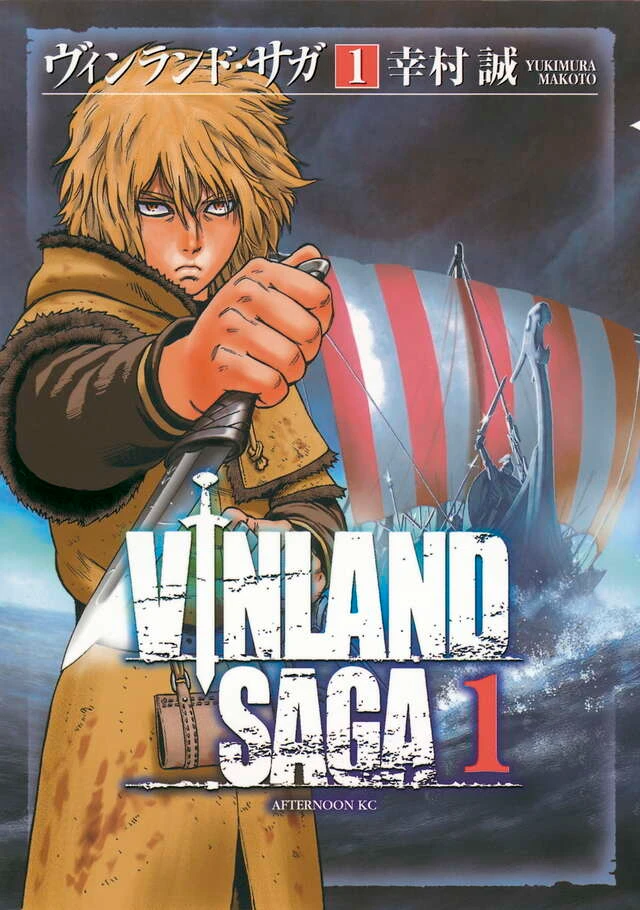
Afternoon KC
The new edition.
Open the book.
Find its publishing record.
The colophon, 奥付 (okuzuke), brings together the title, author, publisher and publication details. In tankōbon it often appears near the end. The printing statement has no fixed position: it may run horizontally or vertically, near the top or bottom. The Research Institute for Publications’ glossary also describes the colophon without prescribing a single layout. [2]
These two examples show why knowing where to look helps, but memorising one corner of the page does not.
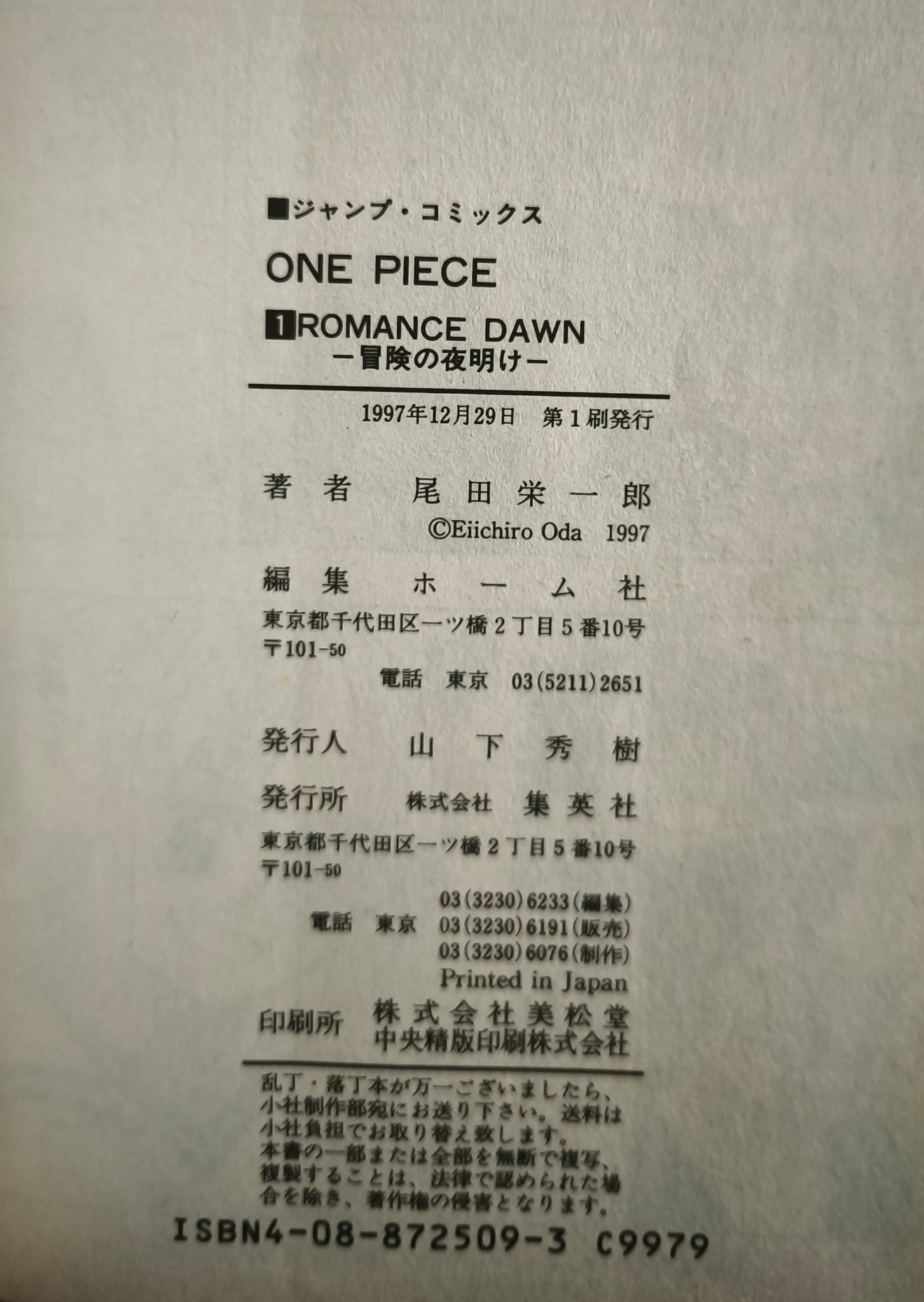
In this photograph, the statement is near the top of the publishing block, immediately below the title and horizontal rule. The copyright further down is not a second printing.
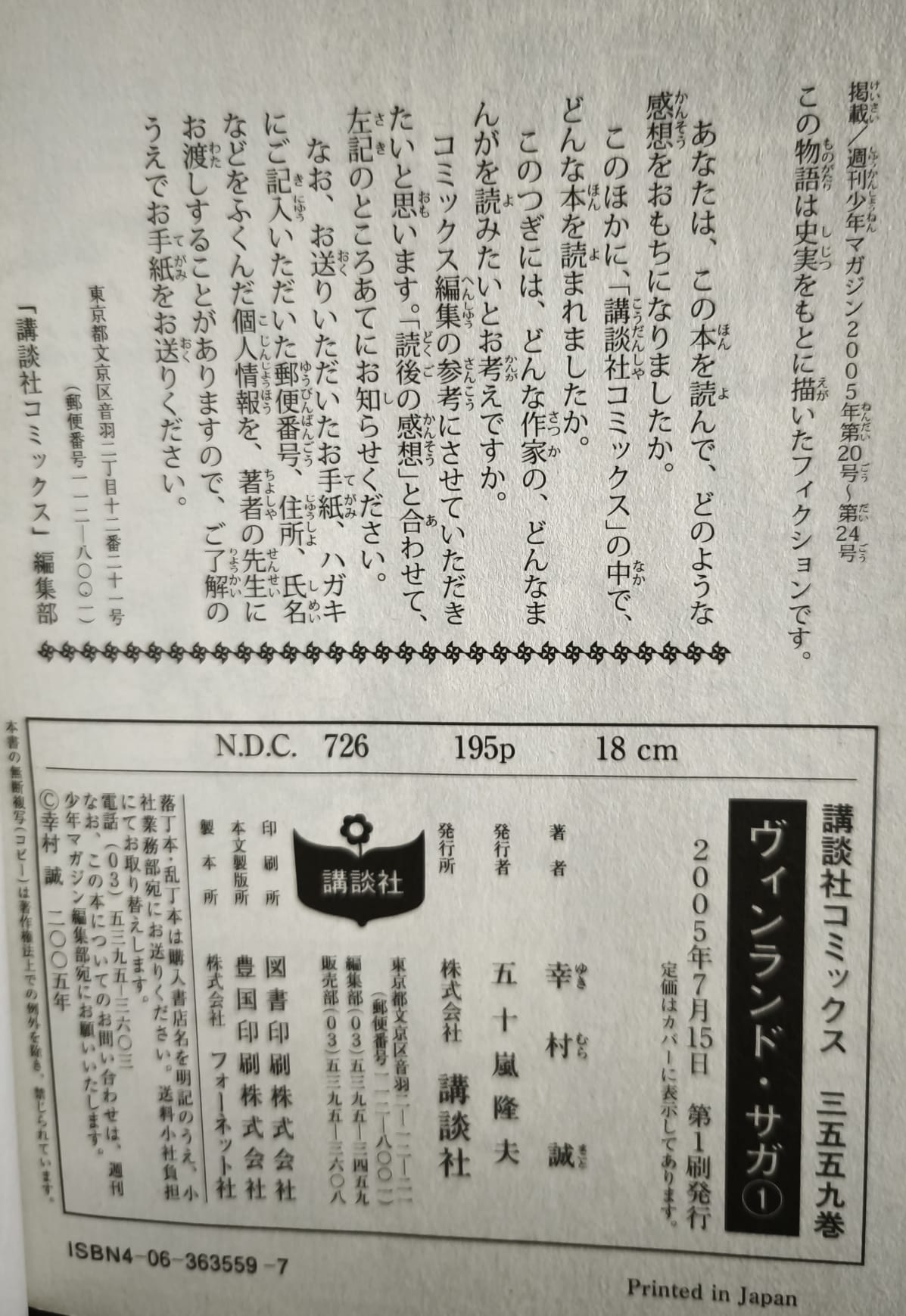
Look at the lower right: the date runs vertically, to the left of the black title strip. Other references to 2005 concern the chapters’ publication in the magazine.
The wording to recognise.
Even if you do not read Japanese.
年, 月 and 日 separate the year, month and day. 発行 refers to publication. The crucial part specifies the edition and printing.
| Wording | Meaning and what to check |
|---|---|
| 初版 | First edition. This alone does not rule out later printings. |
| 第1刷発行 | First printing published. Check for a subsequent reprint line. |
| 初版第1刷発行 | First edition, first printing. |
| 初版第2刷発行 | First edition, second printing. Not the initial print run. |
| 初版発行 | First edition published: read the full history, as in the Mazinger example below. |
Numbers can also appear as Japanese characters: 第一刷 uses 一, meaning one. Older books may use a Japanese era year. Keep the full wording and check its conversion rather than treating it as an abbreviated Western year.
One caution with older books. 版 and 刷 are not always used strictly. The National Institute of Informatics makes this point in its cataloguing guidance. “2版” alone does not establish revised content: you need publishing context and a comparison between the copies. [3]
One date or two?
Read what they describe.
A common layout gives the first printing one line in the publication history; a reprint retains the initial date and adds the date of the actual print run. A third printing does not necessarily list three dates: it may show only the first and the third.
This is a useful starting point. It becomes misleading when turned into “there must be only one date anywhere on the page”. First identify the printing-history lines, then read the statement beside each date.
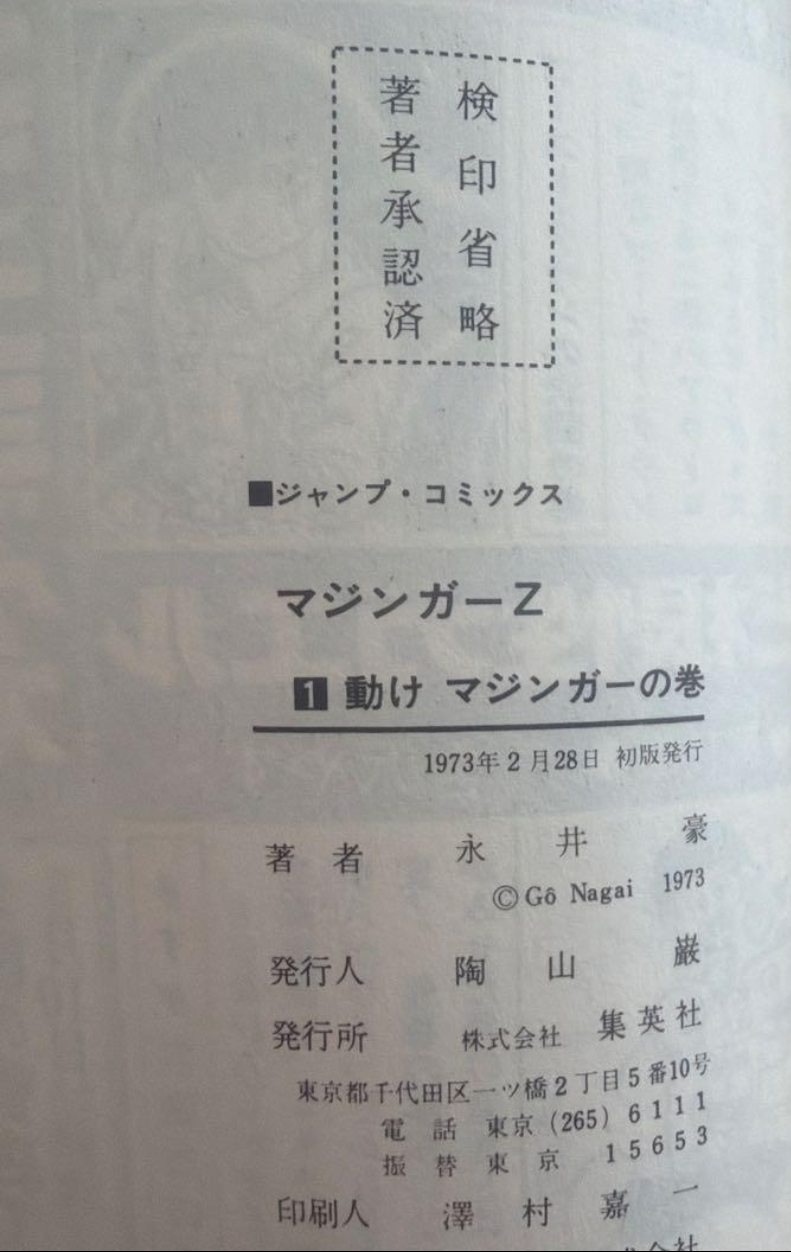
This copy has one line in its publication history. The wording is 初版発行: we reproduce what is visible, without adding a 第1刷 statement that is not in the photograph.
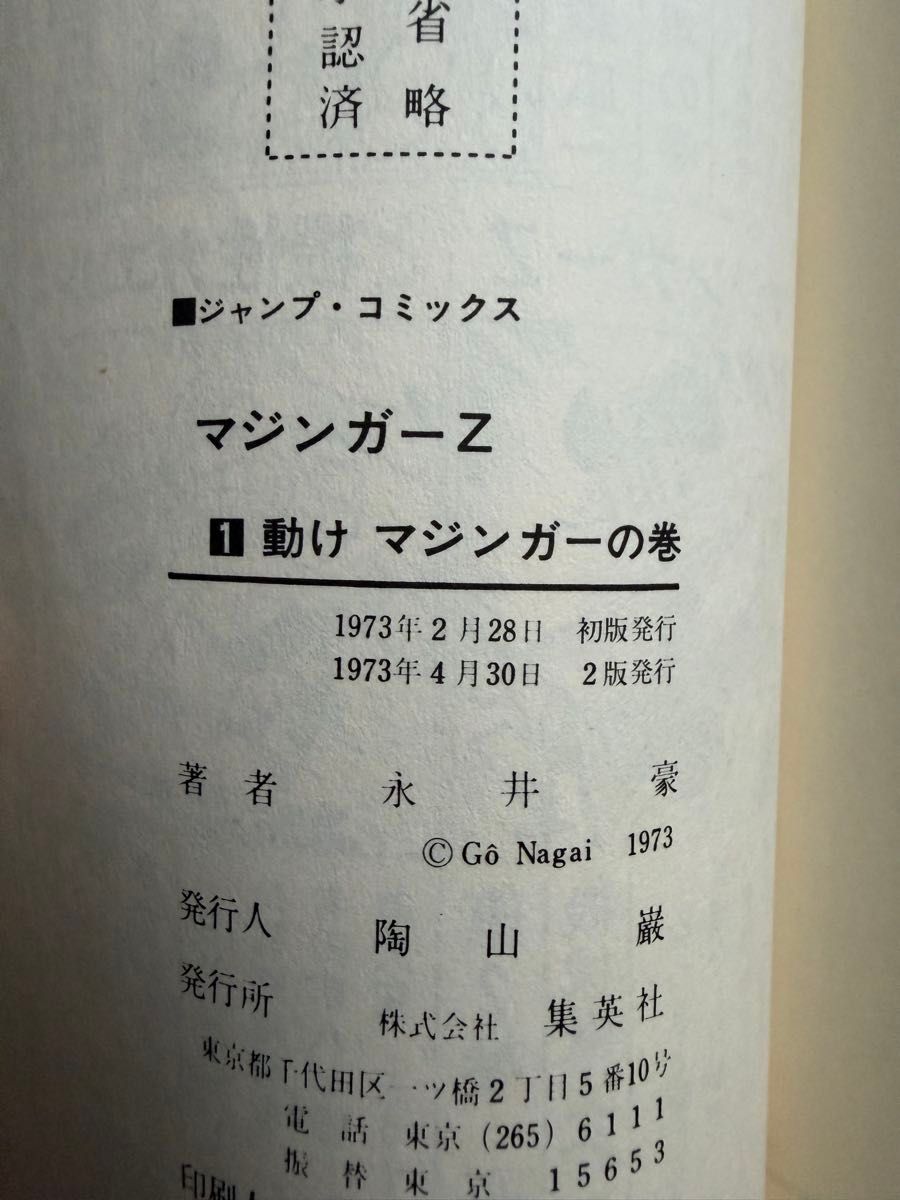
1973年4月30日 2版発行28 February 1973 · first edition.
30 April 1973 · issue described as “2版”.
The second line identifies this copy’s later issue. February remains as a historical reference: reading that line alone does not make this a first printing. The photo says 2版, not 第2刷; the term alone does not establish revised content. Comparison photograph from a Yahoo! Japan listing. [7]
Other dates are not necessarily reprints
Copyright, chapter serialisation and promotional deadlines describe different things. Nippon Sangoku is a particularly clear example: the statement identifies a first edition, first printing, while the same page also lists dates when the chapters appeared online.
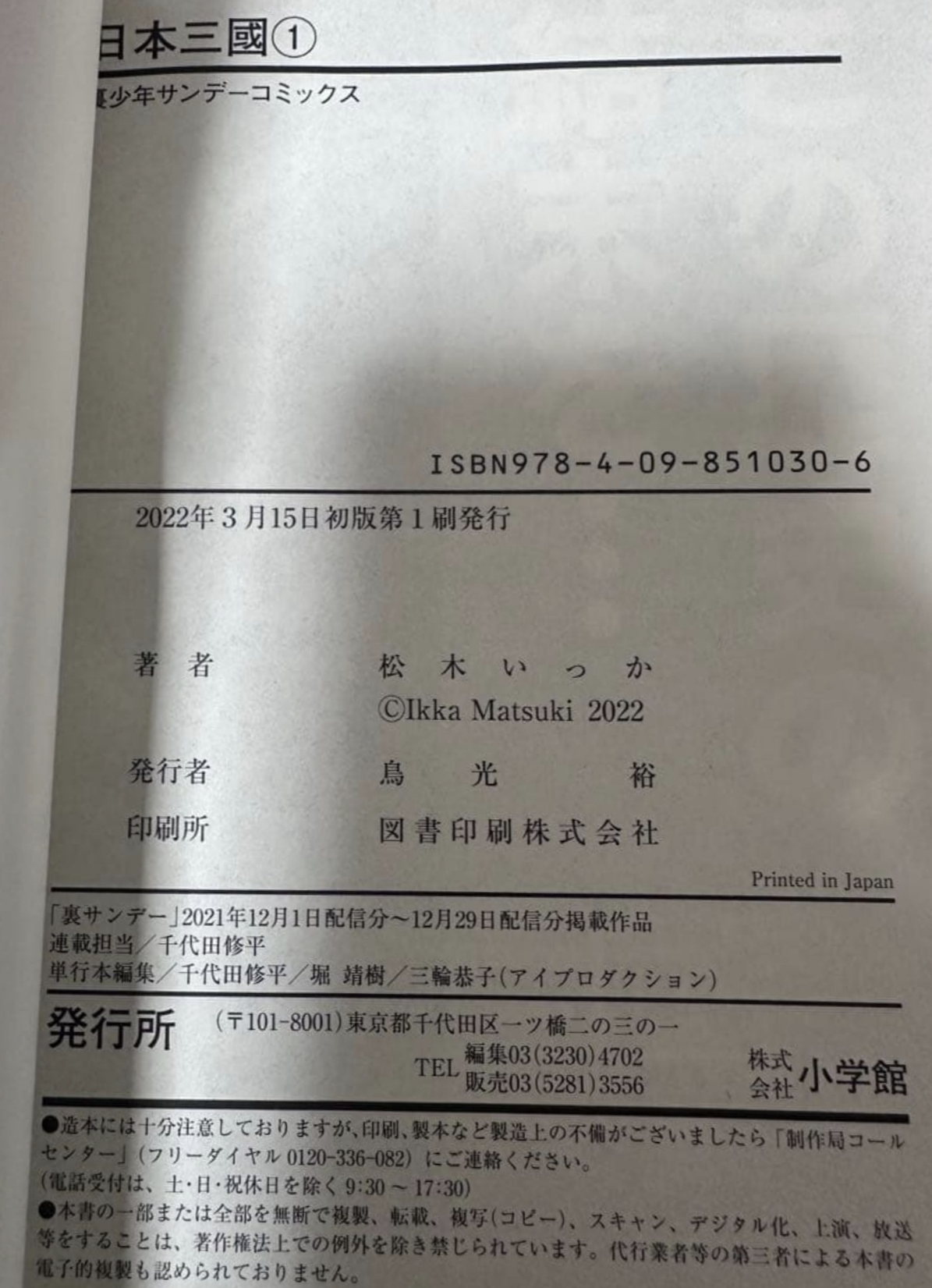
The relevant line sits below the ISBN, roughly halfway down the page. Further down, 1 and 29 December 2021 refer to the Ura Sunday serialisation of the collected chapters, not two reprints. This is why each date needs its context.
What about the release date online?
The colophon date can differ from the bookshop release date. Shōgakukan explains that these are distinct publishing details. [4] Our COSMOS 1 example went on sale on 17 November 2023, while its colophon says 22 November. The difference alone does not make the copy suspicious.
The same ISBN is not enough
An unchanged reprint can retain the same ISBN, as the International ISBN Agency explains. The number helps identify the publication; it does not certify its print run. An identical cover or sealed packaging leaves that question open too. [5]
The book is a first printing.
What about its obi?
An obi is the promotional band wrapped around many manga. Not every first printing automatically comes with one: check the particular publication. Our archive classifies Bastard!! 1 and Doraemon 1 as editions without an obi. A single photograph showing no band, however, does not establish that one was never supplied.
When an obi accompanied the original release, check whether the one being sold is consistent with that initial printing. A band can be slipped off and moved: a genuine first-print book may wear a later obi, while a reprint may wear the correct launch obi.
A different obi does not change the printing recorded inside the volume. It changes the pairing you are buying.
Design, wording, flaps, back and coupons need to match the reference version.
When the difference is visible: Chainsaw Man
In our archive comparison, the later obi adds a reprint announcement. A small photograph, or one cropped around the character alone, can hide exactly this detail. The Frieren dossier offers another comparison.
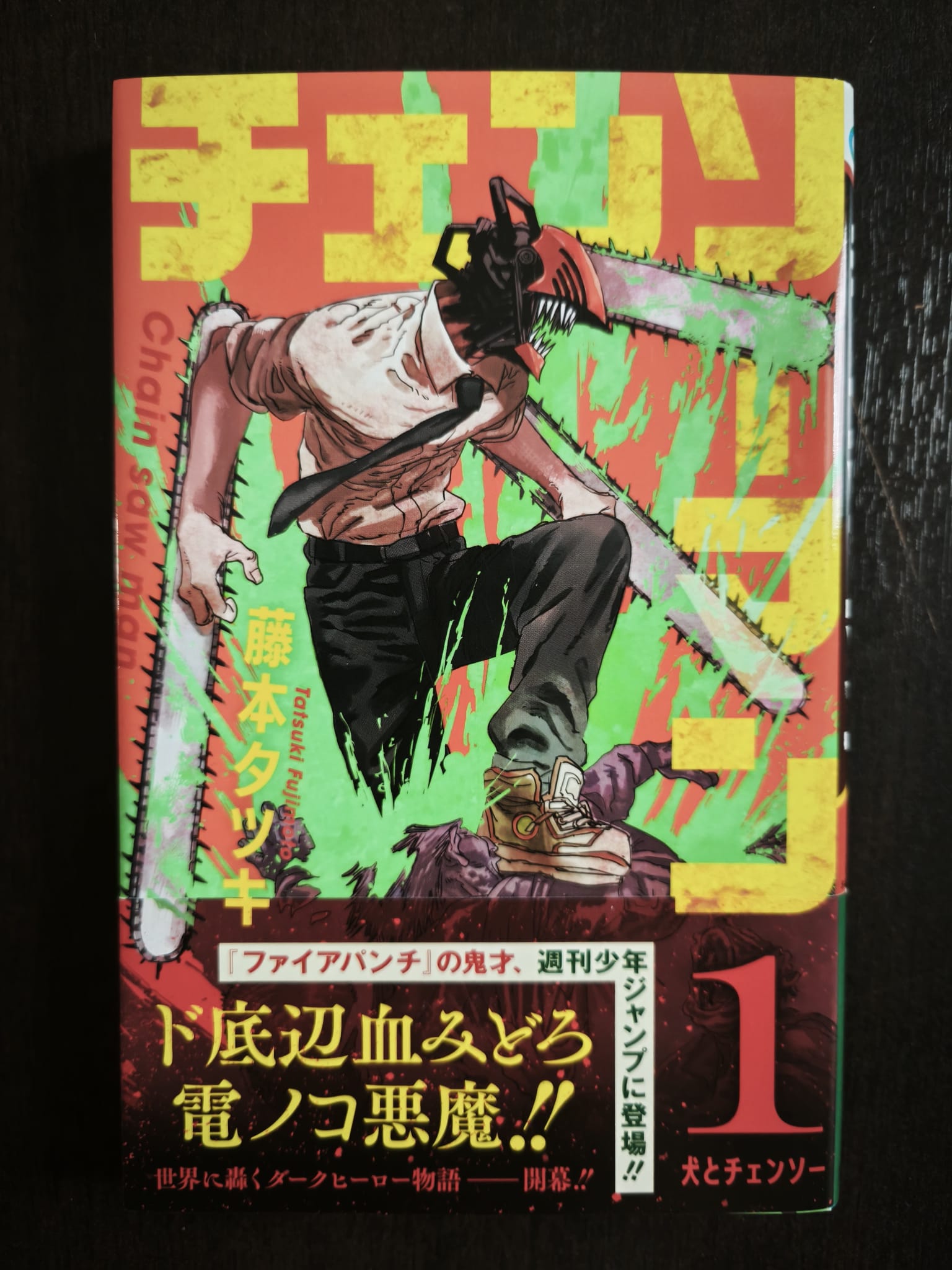
This is the first-print pairing shown in the archive. Compare the whole band with the one beside it: this version lacks the yellow immediate-reprint notice. The preview has an isolated background; open it to inspect the unchanged original.
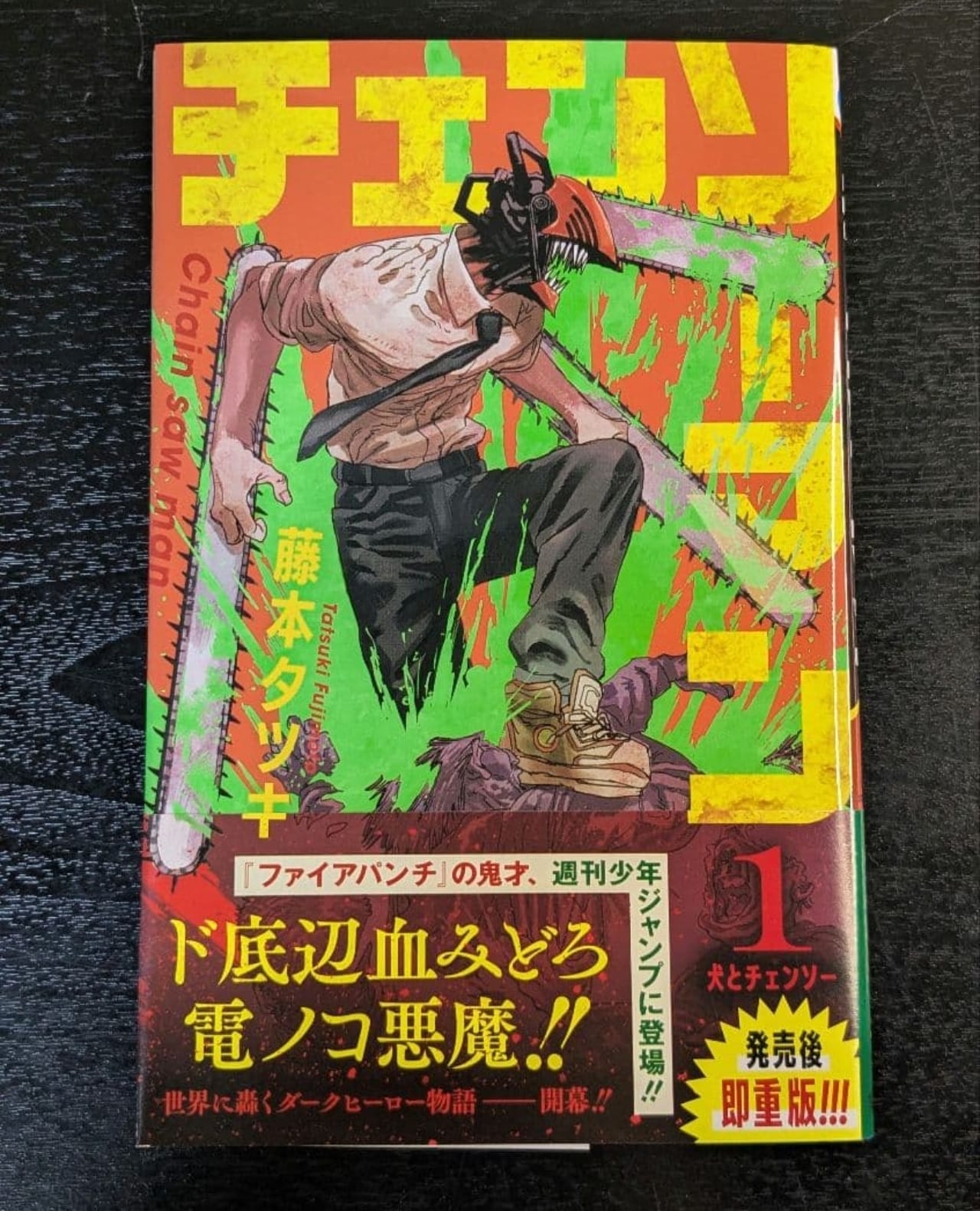
The yellow notice at the lower right advertises the reprint. It identifies a later promotional obi, not the printing of whichever book wears it today: that still requires the colophon. Isolated preview; the viewer opens the original photograph.
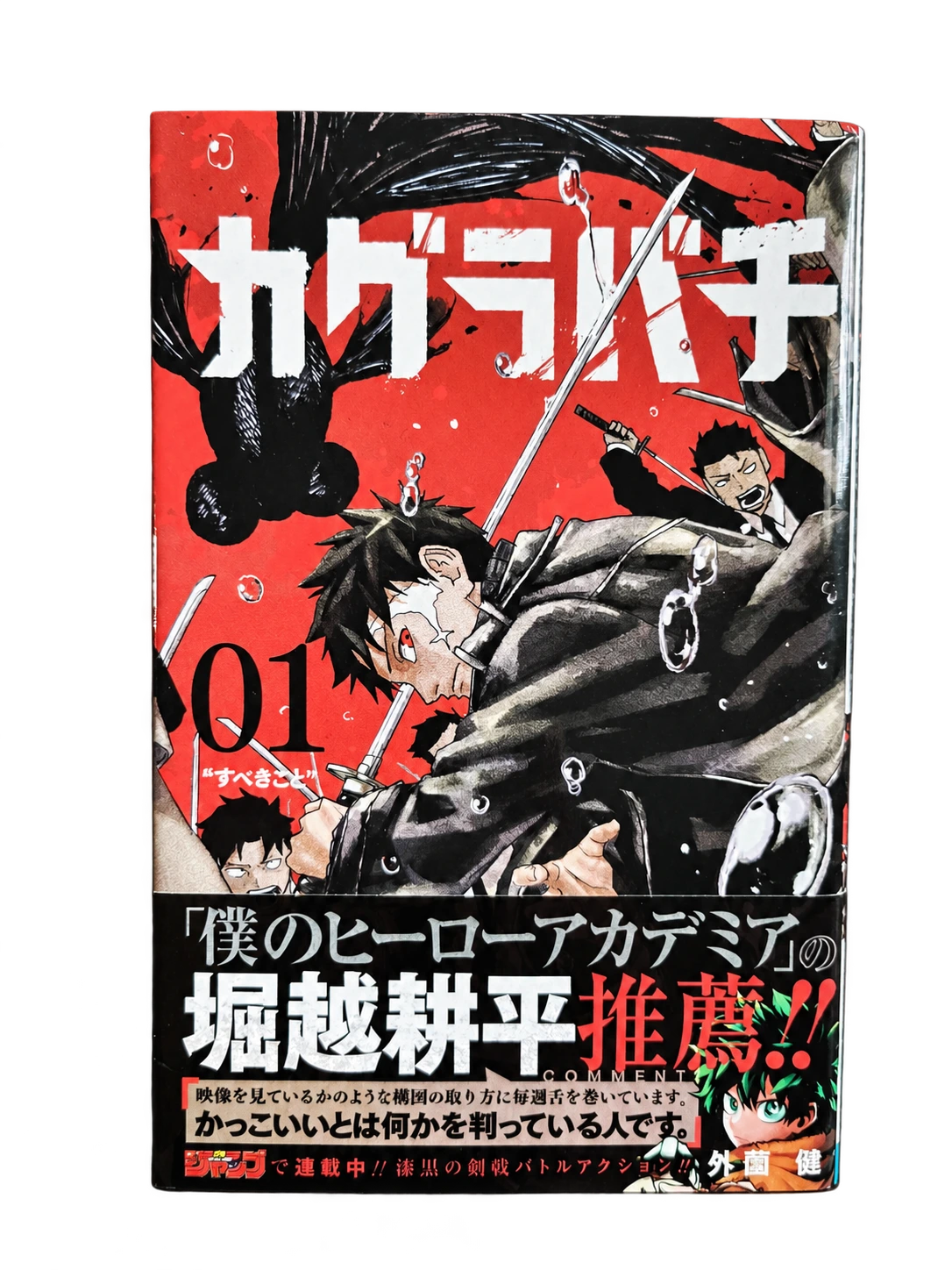
When it is not visible: Kagurabachi
The archive note reports an aesthetically identical obi on the next printing. We show the reference copy here, not a photographic comparison of two print runs. The reported matching design does not identify the book’s printing. You need to open it.
Read the dossier note ↗“With obi” does not mean “complete obi”
Some bands include a cut-out entry coupon for a promotion. A book can still have its obi wrapped around it while that piece is missing. Ask to see the unfolded flaps and back, especially if you are paying a premium for completeness.
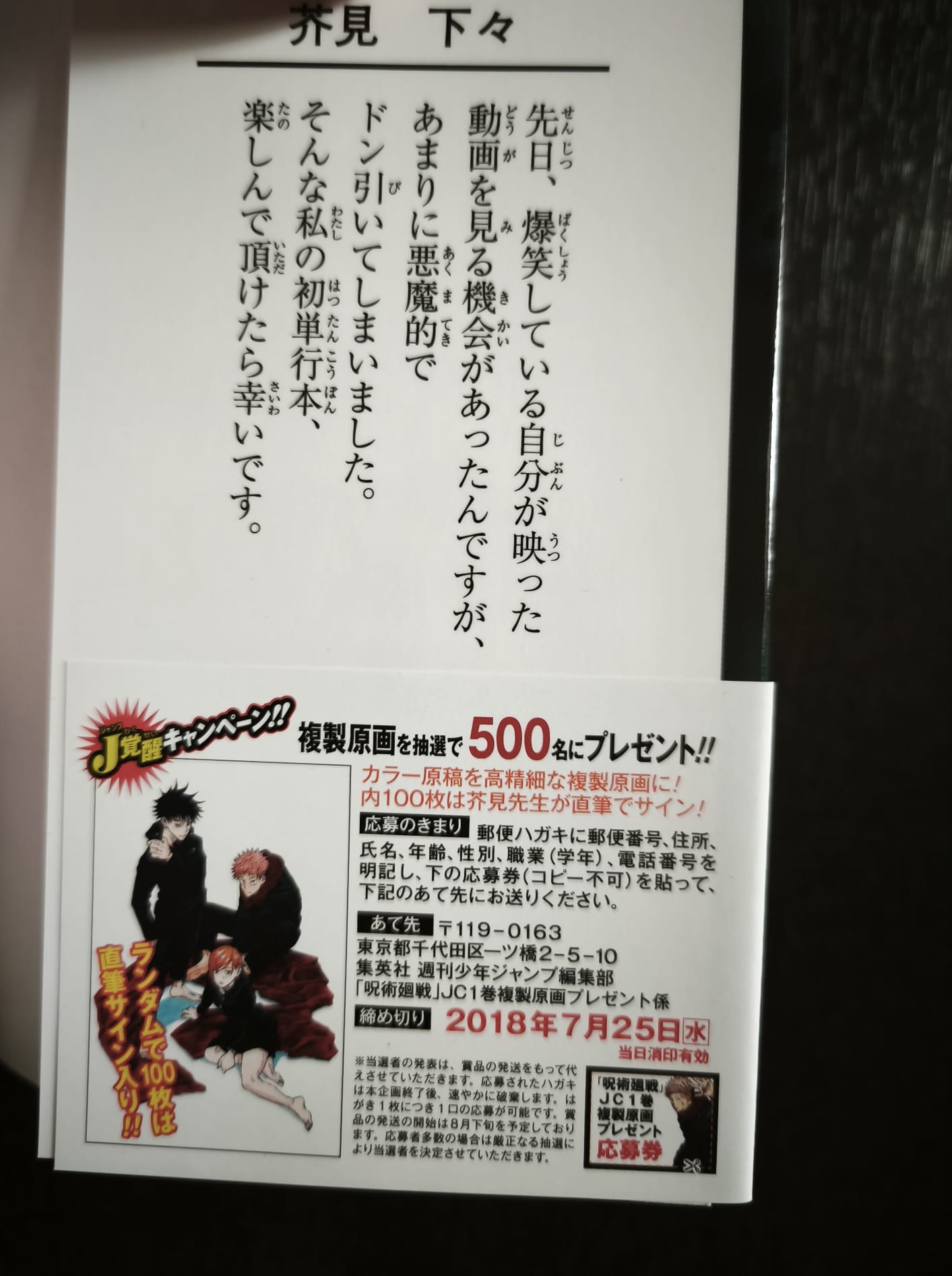
The coupon is at the lower right, within the cutting line marked with scissors. Cutting it off does not change the book’s printing, but removes part of the obi. 25 July 2018 is the promotional deadline, not the printing date. Isolated preview; the unchanged original is available in the viewer.
The same check applies to the Vagabond 1 coupon, documented in its dossier. A missing coupon and a later-print obi are different issues: describe them separately when selling too.
Those little leaflets
are worth keeping.
Between the pages you may find flyers, illustrated cards, bookmarks or other promotional inserts. Keeping them can matter to someone seeking a copy as close as possible to its original retail state. But titles did not all come with the same contents, and a loose insert can be added later: check its consistency with the edition and period.
KADOKAWA also distinguishes obi, bookmarks and flyers from the book itself in its shop conditions. That describes their accessory status; it does not determine their value to a collector. [6]
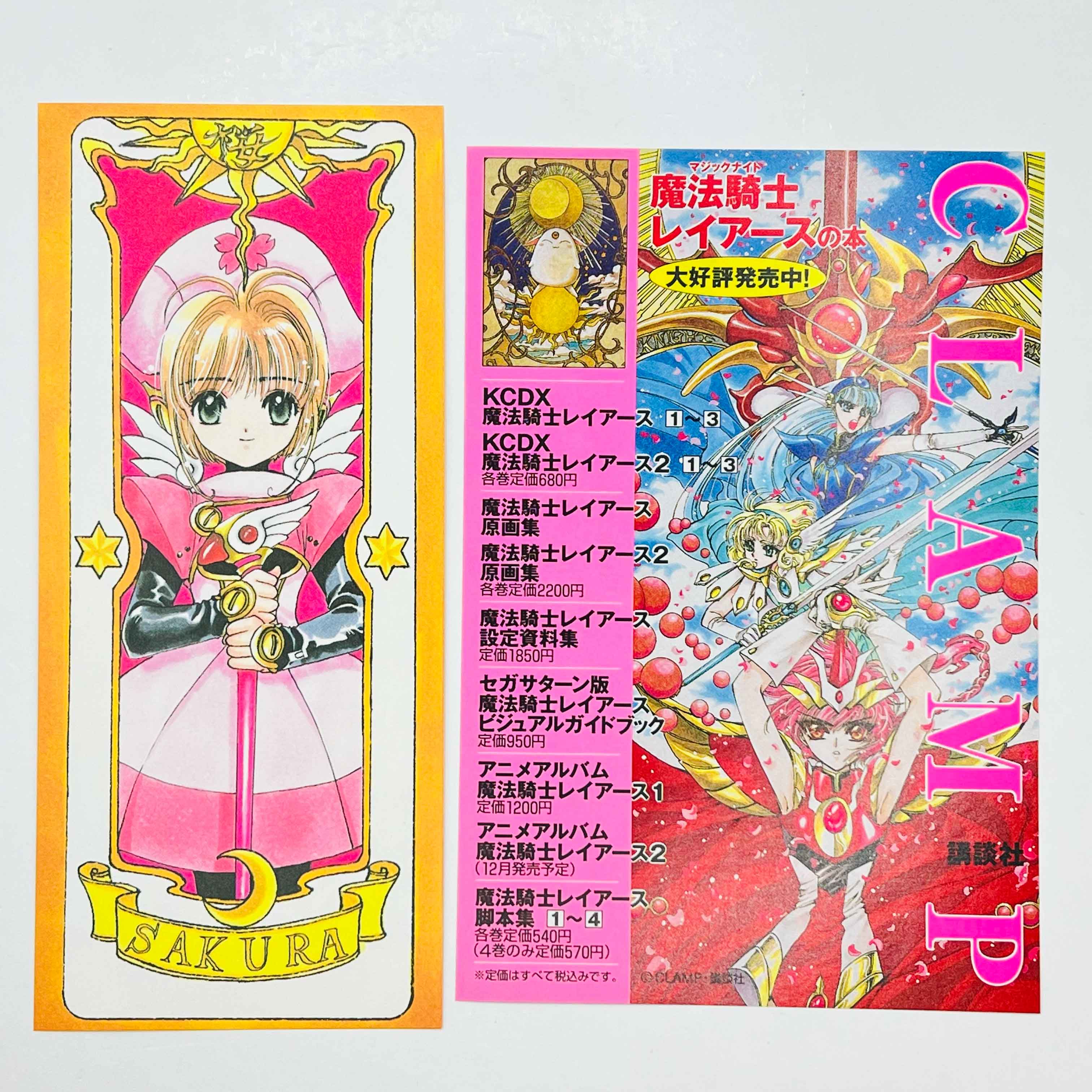
An illustrated Sakura card on the left; a leaflet advertising Magic Knight Rayearth books on the right. These accompany the copy photographed by 1stPrint, rather than establishing a guaranteed checklist for every first printing. The dossier also links the other photographs of that copy. [8]
Completeness and grade are different questions
A high grade is not an inventory of everything originally supplied with a manga. When buying a graded copy, check the book, jacket, obi and declared accessories separately. If preparing a BGS or EGC submission, ask how loose inserts will be handled: we have not verified a uniform public official rule supporting “BGS always excludes them, EGC always includes them”.
Have the inserts photographed and retained, even if they stay outside the slab. A loose flyer, a bound page and a coupon cut from an obi are different components. Do not treat them as interchangeable or detach anything to prepare a grading submission.
“First reprint”
is still a reprint.
The wording may sound close to “first printing”, but it describes a later production: the first reprint normally means the second print run. If you want the first, do not let a listing headline replace reading the colophon.
In first-print collecting, a reprint can sell for much less despite looking almost identical. There is no percentage that applies to every manga, and “reprint” does not automatically mean “worthless”: title, edition, condition, completeness and demand all matter. A high asking price alone does not show that anyone paid it.
Identify the copy first, then compare completed sales of comparable examples. Our Graded prices section lets you examine recorded sales and the effects of grade, jacket, obi and alterations. Do not automatically use a complete first-print sale to value a second printing.
Before paying,
ask to see the book.
- Identify the edition and format. Title, volume, imprint and publisher should match what you are looking for.
- Request the full colophon. A sharp image, no hidden lines, not just a crop showing the first date.
- Read every publication-history line. Separate the actual printing from copyright and serialisation dates.
- Check the jacket and obi. Front, back, spine, flaps and coupons; compare the same edition.
- Ask about inserts separately. Request photographs and a description of what is present or missing.
- Inspect the condition. Page edges, corners, stains and repairs; for a slab, the entire label and certification number.
Printing and authenticity need separate checks. A counterfeit can reproduce a colophon with the correct date too. Continue with our photographic comparisons of counterfeit tankōbon and counterfeit zasshi. For interventions on a book, see the real labels in the altered manga guide.
The Archive is a starting point for comparing a copy: photographs, colophons and notes are collected in each dossier. If a detail does not add up, ask for more images before deciding.
Questions that come up often
Are first edition and first printing the same thing?
No. The same edition can be reprinted many times. Read the statement identifying the actual print run in the colophon.
Does a single date prove a first printing?
No: read what the date describes. The useful rule concerns printing-history lines, not every date on the page. Nippon Sangoku, for example, also includes serialisation dates.
Does the original date remain on reprints?
It can remain alongside the later printing date. The Mazinger Z comparison shows exactly this: reading only the initial line leads to the wrong conclusion.
Do all first printings have an obi?
No. Check the particular edition. When an obi was originally supplied, verify the correct version and its flaps and coupons.
If the obi matches the first printing, does the book?
Not necessarily. The design can be reused and the band can be moved between copies. Check the book’s printing in its colophon.
Does a missing insert make the book a reprint?
No. The print run does not change. Collectible completeness may change instead; check which accessories are documented for that edition.
Does “first reprint” mean first printing?
No. It is a later production, normally the second print run. Always request a colophon photograph.
Sources and photographs
Editorial review: 16 October 2026. The statements below the photographs were read from the originals and translated; excerpts are identified. Enlargeable images open unchanged original files. Some obi previews reuse the archive’s isolated presentation images.
- 01 · EDITION AND PRINTINGShōgakukan · 版 and 刷
The publishing distinction and reprints within the same edition.
- 02 · COLOPHON AND OBIAJPEA · publishing glossary
Definitions of 奥付 and 帯; the colophon has no fixed layout.
- 03 · TERMINOLOGY AND CONTEXTNational Institute of Informatics · cataloguing guidance
Page 13: 版 and 刷 are not always used strictly; distinguish actual changes in content.
- 04 · TWO PUBLISHING DATESShōgakukan · release and publication dates
Why the colophon date may differ from the bookshop release.
- 05 · ISBNInternational ISBN Agency · ISBN assignment
An unchanged reprint retains its ISBN.
- 06 · ACCESSORIESKADOKAWA Store · frequently asked questions
Obi, bookmarks and flyers in the shop’s conditions; not a grading policy.
- 07 · MAZINGER COMPARISON PHOTOYahoo! Japan · later issue
Source of the photograph showing two 1973 publication lines, retained in our research archive. A listing may no longer be available.
- 08 · INSERT PHOTOGRAPH1stPrint · Cardcaptor Sakura 1 with obi, 1996
Source of the copy with a Sakura card and Rayearth leaflet.
The other colophons, obi and coupon photographs were supplied by the community and retained in the linked dossiers. The Kagurabachi report is presented as an archive note, without implying a photographic comparison that we do not have here. The Vinland covers illustrate the editions, not the printing of a copy for sale. The guide cover is an editorial illustration, separate from the documentary photographs.