
Manga and zasshi formats: sizes, editions and sleeves
From shinsho and B6 to larger formats: identify books, magazines and editions, measure your copy and choose a protective sleeve that fits.
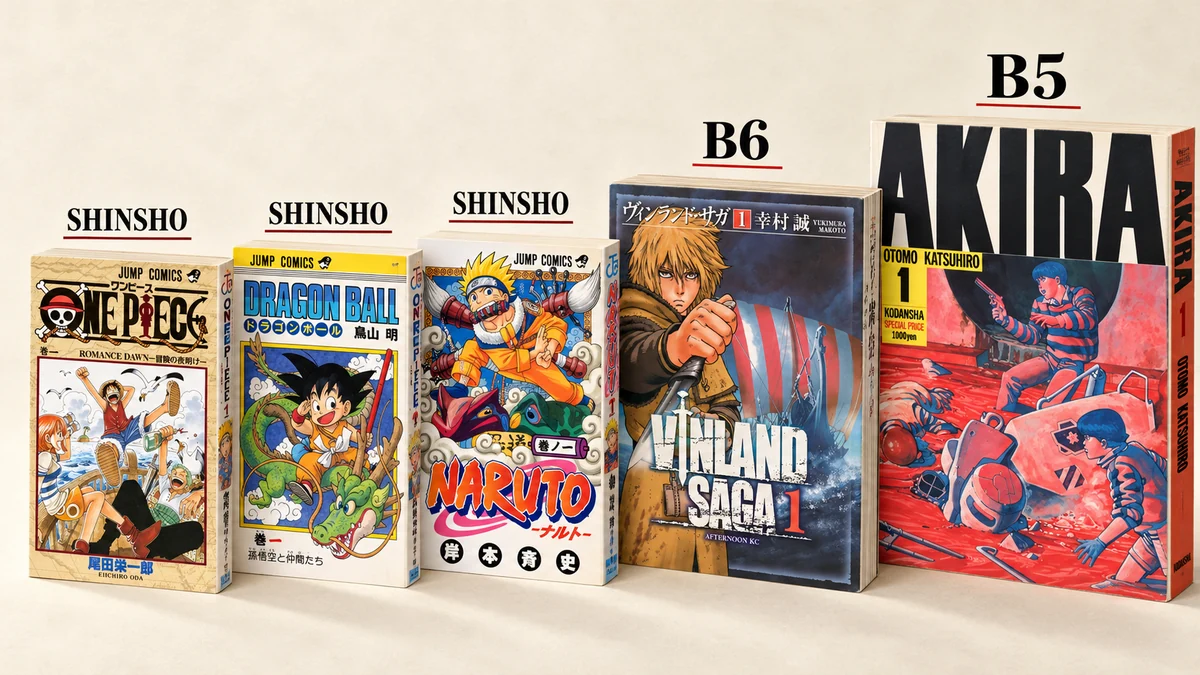
You have found the volume you wanted. Now you buy a sleeve labelled “for manga” and discover that the book barely fits—or slides around inside. The problem often starts with a word: tankōbon is not a measurement. A good fit starts with identifying your edition and measuring your copy, including its thickness.
Let’s use books from the archive to make sense of the names you encounter and turn them into practical choices.
Book or magazine?
Identify the object first.
A tankōbon is a standalone book. Manga volumes often collect chapters previously published in magazines or online. The book may be compact or much larger: the term describes the publication, not its dimensions or printing. [1]
Zasshi means magazine. Manga anthologies can contain several series, features, advertising and supplements. Identify the magazine by title, year and issue number: an issue containing a story’s debut is a different object from its first collected volume.
Keep three questions separate. Is it a book or magazine? What is its physical format? Which edition is it? Then check the printing in the colophon. “B6”, “kanzenban” and “first printing” answer different questions.
Not every series begins on paper, either. For a manga first published online, its debut and its first physical publication are separate events.
Familiar stories.
Different formats.
Publishers classify the original first volumes of One Piece, Dragon Ball and Naruto as shinsho. Vinland Saga’s 2006 Afternoon KC edition is B6; the original KC Deluxe edition of AKIRA is B5. All five are books, although they take up different amounts of shelf space. [2–4]
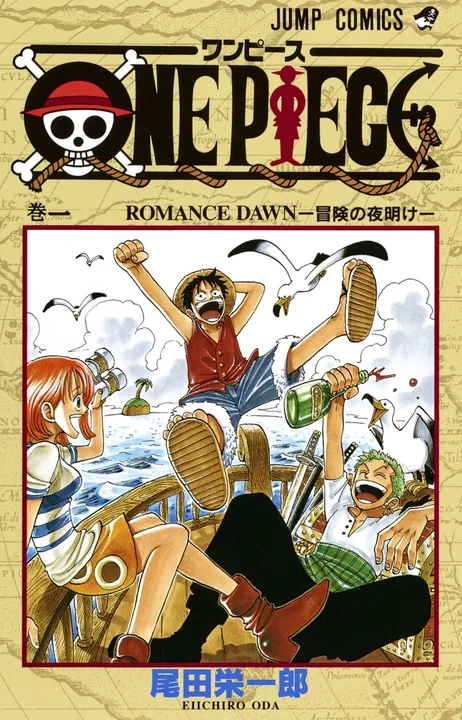 One Piece 1Jump ComicsSHINSHO
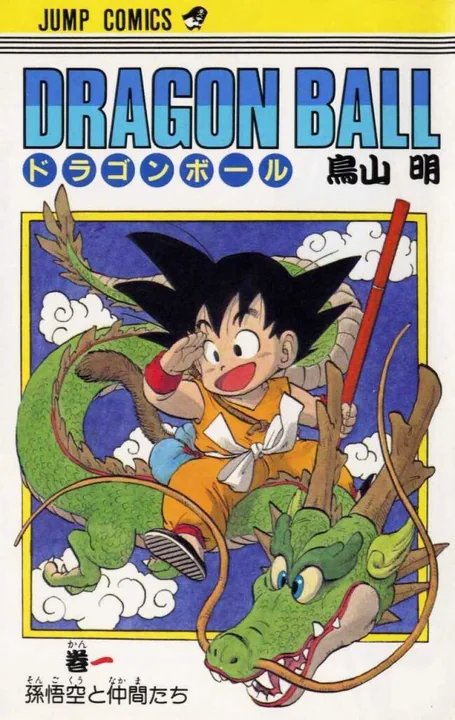 Dragon Ball 1Jump ComicsSHINSHO
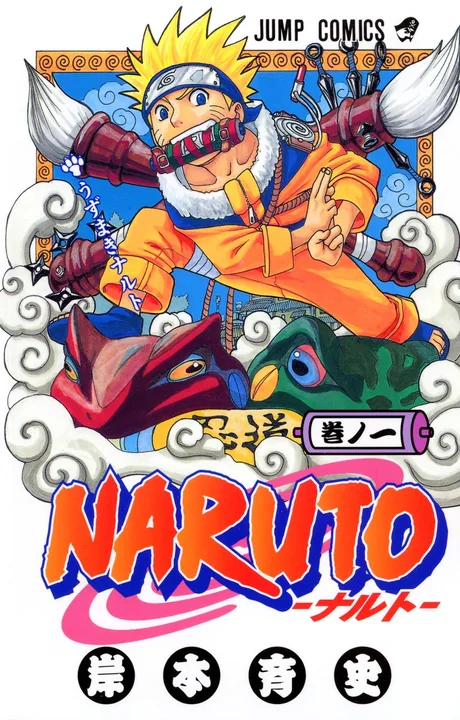 Naruto 1Jump ComicsB6
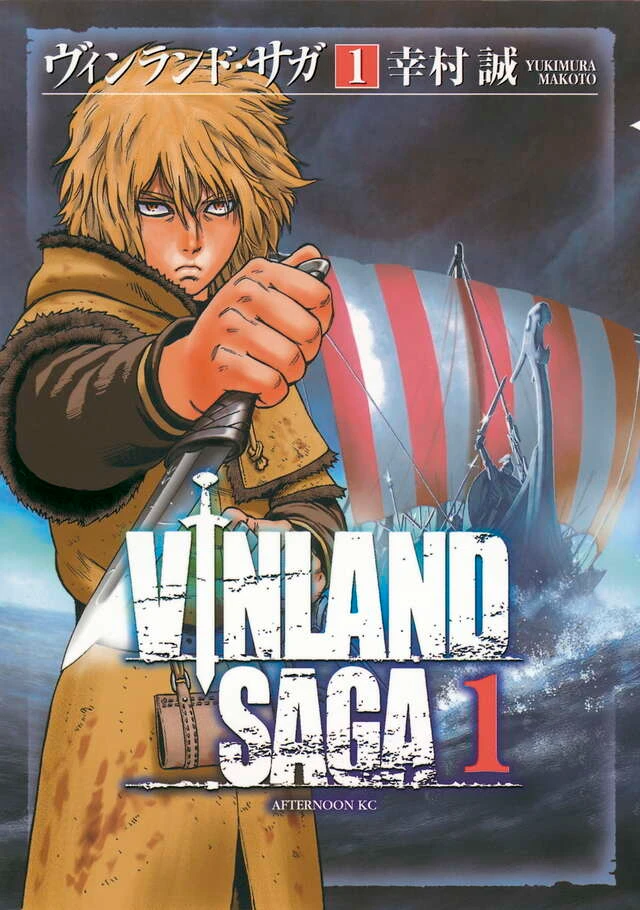 Vinland Saga 1Afternoon KC · 2006B5
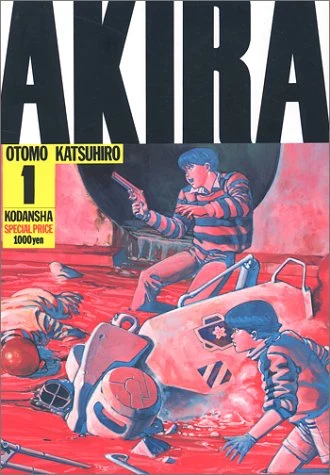 AKIRA 1KC Deluxe
Existing archive images identify the editions; this is not a scale comparison. Labels give publisher format categories, not measurements taken from the photographed copies. Select a book to open its archive entry.
The sizes you will see most often
These are nominal reference dimensions. Trimming, the imprint and the dust jacket can affect a copy’s actual footprint: you still need to measure it before choosing protection. [5]
| Format | Nominal size | Keep in mind |
|---|---|---|
| A6 / bunko | 105 × 148 | Compact pocket format. |
| Shinsho | 106 × 173 in the AJPEA reference | Dimensions vary between imprints: do not automatically assign these measurements to every shinsho manga. |
| B6 | 128 × 182 | Used by many manga imprints. |
| Shiroku | 127 × 188 | Close to B6, but different. |
| A5 | 148 × 210 | Used for books and magazines. |
| B5 | 182 × 257 | May be a magazine or a book, such as AKIRA. |
| A4 | 210 × 297 | Modified A4 formats need not match these dimensions. |
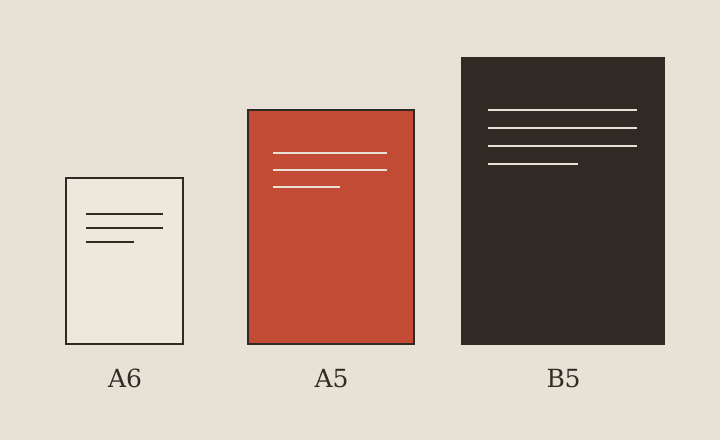
Magazines come
in different sizes too.
When you picture a zasshi, a thick issue of Jump may come to mind. But “magazine” is not a single size. Official publisher records offer very different examples. [6]
CoroCoro Comic
A manga magazine in a more compact format than B5.
Weekly Shōnen Sunday
The publisher specifies B5 with glued binding.
Newtype
The November 2026 record says A4変形判: modified A4, not exact A4. This animation magazine also carries manga.
These examples challenge an easy assumption: AKIRA is a B5 book; CoroCoro is an A5 magazine. Size alone does not identify the type of publication.
For a historical magazine, check the actual issue. A current specification does not establish identical dimensions for every past issue. Page count, supplements and inserts can also change its thickness, which matters for a sleeve just as much as the cover.
The same title.
A different book.
Format is only part of a manga’s identity. A new edition may change the cover, paper, layout, contents and number of volumes. Japanese edition names help you navigate these differences, but do not guarantee identical features across publishers.
| Term | What it means for collectors |
|---|---|
| Kanzenban 完全版 | A “complete” edition. Check which colour pages, extras or new illustrations that series includes; the term is not a universal size. |
| Aizōban 愛蔵版 | An edition intended to be treasured, often with enhanced presentation. The name alone guarantees neither hardcover binding nor a particular size. |
| Bunkoban 文庫版 | A pocket edition. The same story may be collected in a different number of volumes. |
| Wideban ワイド版 | A particular edition, often collecting more material per volume. “Wide” is not a standard sleeve size. |
| Shinsōban 新装版 | A newly presented edition. Do not confuse it with shinsho / shinshoban 新書判, which refers to format. |
Two examples make the distinction clearer: Dragon Ball kanzenban 1, released in 2002, is A5 and features new covers and colour pages; the original 1985 volume is shinsho. Inuyasha Wide 1 is classified as B6. Neither “kanzenban” nor “wide” replaces the publisher’s stated format. [7]
Vinland Saga: an example from our archive
These two collections are particularly useful: Vinland Saga 2005 is shinsho; Vinland Saga 2006, Afternoon KC, is B6. Both edition and format change, so do not choose a protective cover from the title “Vinland Saga” alone. [3]
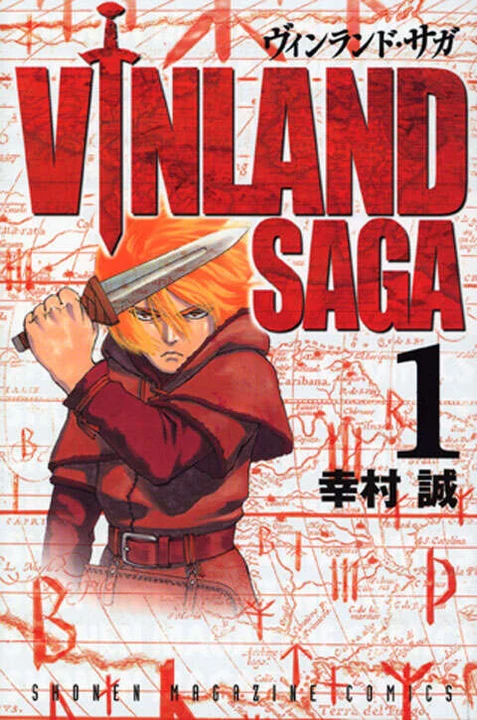
A first printing of a new edition remains distinct from a first printing of the original edition. Check the colophon and printing history to identify it. A larger format or a “deluxe” label alone does not establish rarity or value.
The right sleeve
starts with your copy.
A format narrows your search; actual dimensions help you choose. “For tankobon”, “magazine” and numbered sizes are often commercial categories: they are not a shared standard across all manufacturers. Compatibility with an Italian edition does not automatically apply to the Japanese edition.
Measure three things first
From edge to edge of the closed book, without opening or compressing it.
From the head to the foot of the copy, including anything that genuinely extends beyond it.
The closed book’s depth, including its dust jacket, obi and any inserts you will keep inside.
Set the copy on a clean surface and measure gently. Do not squeeze it to make the measurements work. If the obi is creased or fragile, do not try to flatten it to gain room.
Then read the protection’s specifications
- Identify the product.A bag encloses the whole book; a protective book cover wraps around its cover. They use different fit criteria.
- Look for usable space, not just the largest number.The stated measurement may be internal, external or taken with the bag laid flat. Check whether it includes the closing flap and how much room seams and folds take up.
- Account for thickness.Two books with identical cover dimensions can need different bags. A flat pocket must also wrap around the spine: the front cover’s width and height alone do not prove that the book will fit.
- Try one copy before buying for an entire series.It should slide in and out without force, catching the obi, folding corners or bowing pages. An overly tight sleeve works against the book.
There is no universal “always add 5 mm” rule. Thickness, seams, seals, gussets and closures affect the fit. If the specification is unclear, ask the manufacturer about compatibility with your copy’s three dimensions.
For zasshi, pay particular attention to the spine and supplements. Do not fold a magazine or original insert to make it fit: choose different protection. If the item is fragile or already damaged, consider a suitable enclosure or box instead of persisting with a tight bag.
Good protection.
Beyond the bag.
Check what the protection is made of. The Library of Congress identifies polyethylene (PE), polypropylene (PP) and polyester (PET) without coatings or additives as stable options, and advises against PVC and unidentified plastics. “Acid free” alone does not identify a plastic: look for a declared composition. [8]
Keep an adhesive closure away from paper, dust jacket and obi, including when removing the book. Never apply adhesive tape to the book, even for a small repair. A suitable box can help prevent further handling damage to fragile copies. [9]
A bag does not correct a damp environment. Do not enclose a damp copy or treat plastic as a solution for an attic or basement. Avoid packing books tightly and periodically check for condensation, unusual smells or deformation. [9]
Choose a location away from direct sun, heat sources and possible water leaks. An enclosure limits contact and dust but does not replace suitable environmental conditions. For paper or board touching a book, check that the materials are suitable for preservation. [10]
To see why a little “improvement” at home can become a collector’s problem, explore the examples in our guide to manga alterations.
Before you choose,
check five things.
- Identify the copy: title, volume or issue, language, publisher and edition.
- Check the stated format: a starting point, not a sleeve measurement.
- Measure width, height and thickness: include the dust jacket and obi.
- Read the protection’s specification: usable space, material, closure and thickness compatibility.
- Check the fit without force: preservation begins with how you handle the book.
Common questions
Does tankōbon mean a small format or a first printing?
No. It means a standalone volume, which can have different dimensions and belong to any printing. Original-edition AKIRA is a B5 example.
Are shinsho and shinsōban the same thing?
No. Shinsho, 新書判, concerns format; shinsōban, 新装版, describes a newly presented edition. Their similar names can be misleading.
Are all zasshi B5?
No. Official records list CoroCoro as A5 and Weekly Shōnen Sunday as B5, for example. For a historical magazine, measure the issue you actually own.
Are width and height enough to choose a sleeve?
No. You also need the book’s thickness and the protection’s usable internal space. The copy should slide in and out without compressing paper, dust jacket or obi.
Will a sleeve for an Italian edition fit the Japanese edition?
Not necessarily. The title and volume number may match while size, thickness and edition differ. Compare actual measurements.
Does a bag solve every storage problem?
No. It can limit handling and dust but does not remove the risks of humidity, heat, light or careless handling. Where and how you store the copy matters too.
Sources
- AJPEA · Tankōbon definition.
- Shūeisha · One Piece 1, Dragon Ball 1, Naruto 1.
- Kodansha · Vinland Saga 1 · 2005; Vinland Saga 1 · 2006.
- Kodansha · AKIRA 1 · KC Deluxe.
- AJPEA · Japanese publishing formats and nominal sizes.
- Shōgakukan · CoroCoro Comic; Weekly Shōnen Sunday. KADOKAWA · Newtype · November 2026.
- Shūeisha · Dragon Ball kanzenban 1. Shōgakukan · Inuyasha Wide 1.
- Library of Congress · General preservation FAQ: plastic materials.
- Library of Congress · Book preservation FAQ: handling, storage and repairs.
- Canadian Conservation Institute · Storing Works on Paper.
Publisher specifications identify the editions discussed here. Nominal sizes are not measurements of the photographed copies. Protective fit advice is a practical application of those distinctions; it is not a certification of any sleeve product. Sources checked on 16 October 2026.