
Vagabond: the seinen giant the market hasn’t fully discovered?
An acclaimed masterpiece. A first printing waiting to be rediscovered? Vagabond, Berserk and Vinland Saga through the eyes of readers and collectors.
Introducing the “Big 3” of seinen
Mention manga’s Big 3, and the names that usually come to mind are One Piece, Naruto and Bleach.
But that label belongs to a particular moment in manga history. It doesn’t stop readers from drawing other, more symbolic, groups of three.
Take seinen — a publishing demographic aimed primarily at adult men, rather than a genre. Three series are often mentioned together:
Berserk, Vagabond and Vinland Saga.
This isn’t an official classification. It’s simply a way of bringing together three great stories about violence, growth, revenge and what real strength means.
And among them, there’s one we think deserves much more attention from collectors:
Vagabond.
What makes Vagabond so important?
This is a manga that has won the Kōdansha Manga Award, the Grand Prize at the Japan Media Arts Festival and the Grand Prize of the Tezuka Osamu Cultural Prize: three enormous honors in the manga world. The first two came in 2000, and the third in 2002.
First serialized in 1998, Vagabond is Takehiko Inoue’s reimagining of Eiji Yoshikawa’s novel Musashi, as outlined on the official Morning page.
Calling it a fictionalized biography of Miyamoto Musashi hardly does it justice.
Vagabond turns his story into something universal and timeless: the journey of a violent, impulsive young man obsessed with becoming “invincible under the sun”, who gradually comes to question everything he believes, one fight at a time.
At its heart, the question isn’t how strong a person can become. It’s what being strong actually means.
If you’ve watched the Vinland Saga anime, you’ll probably recognize some of those themes:
Does strength mean defeating everyone? Surviving? Mastering your fear? Or finally reaching a point where you no longer need to fight?
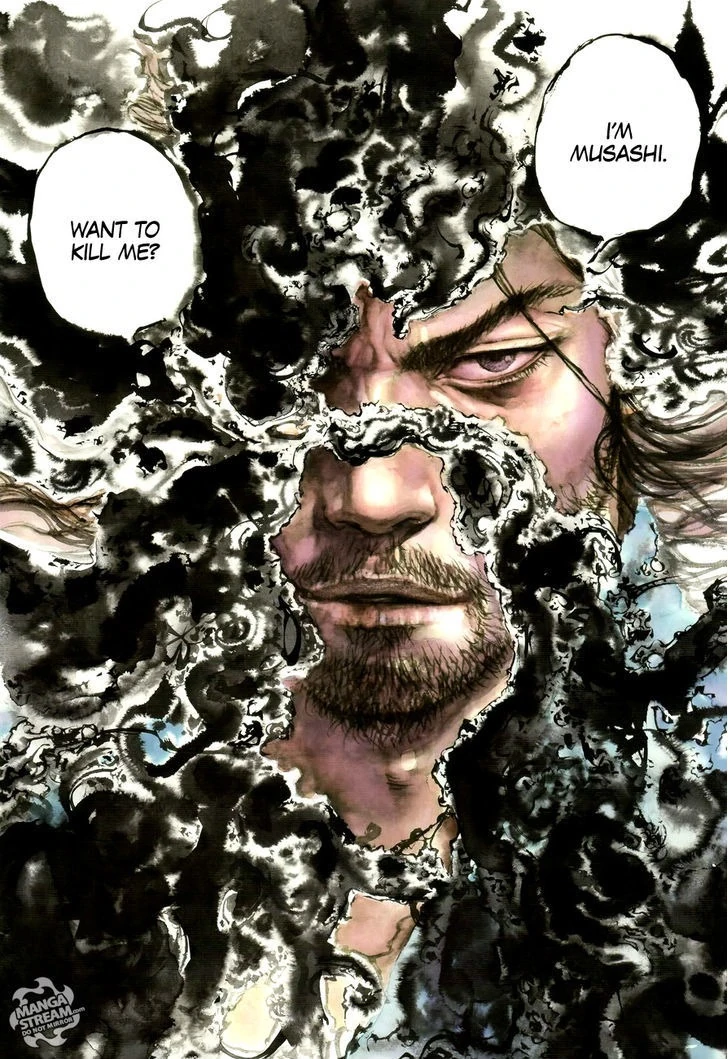
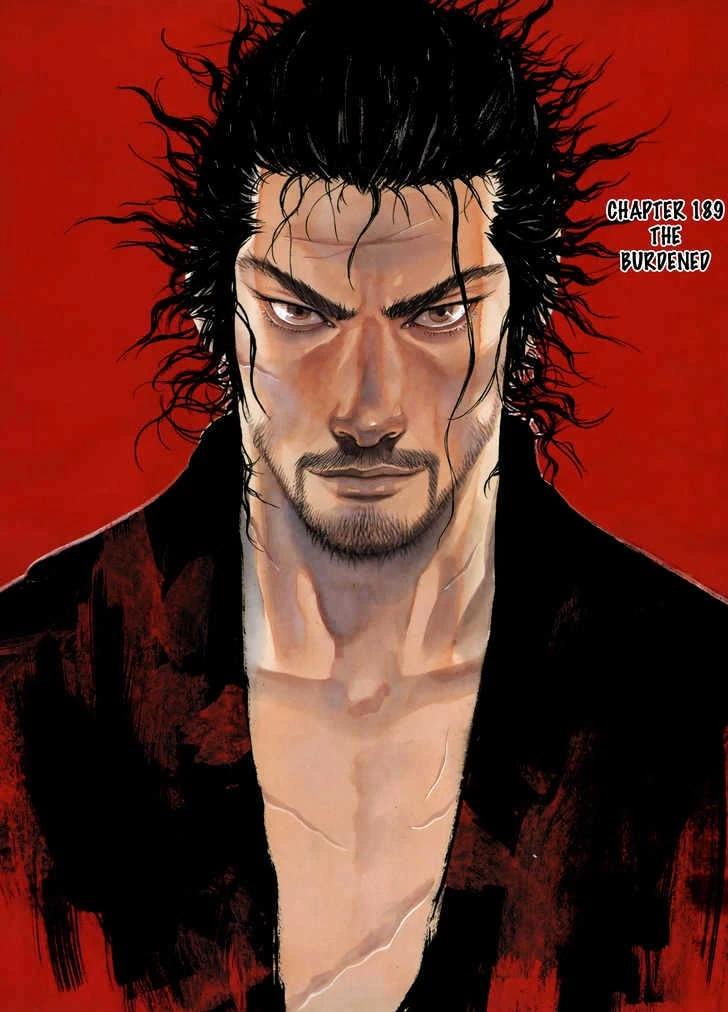
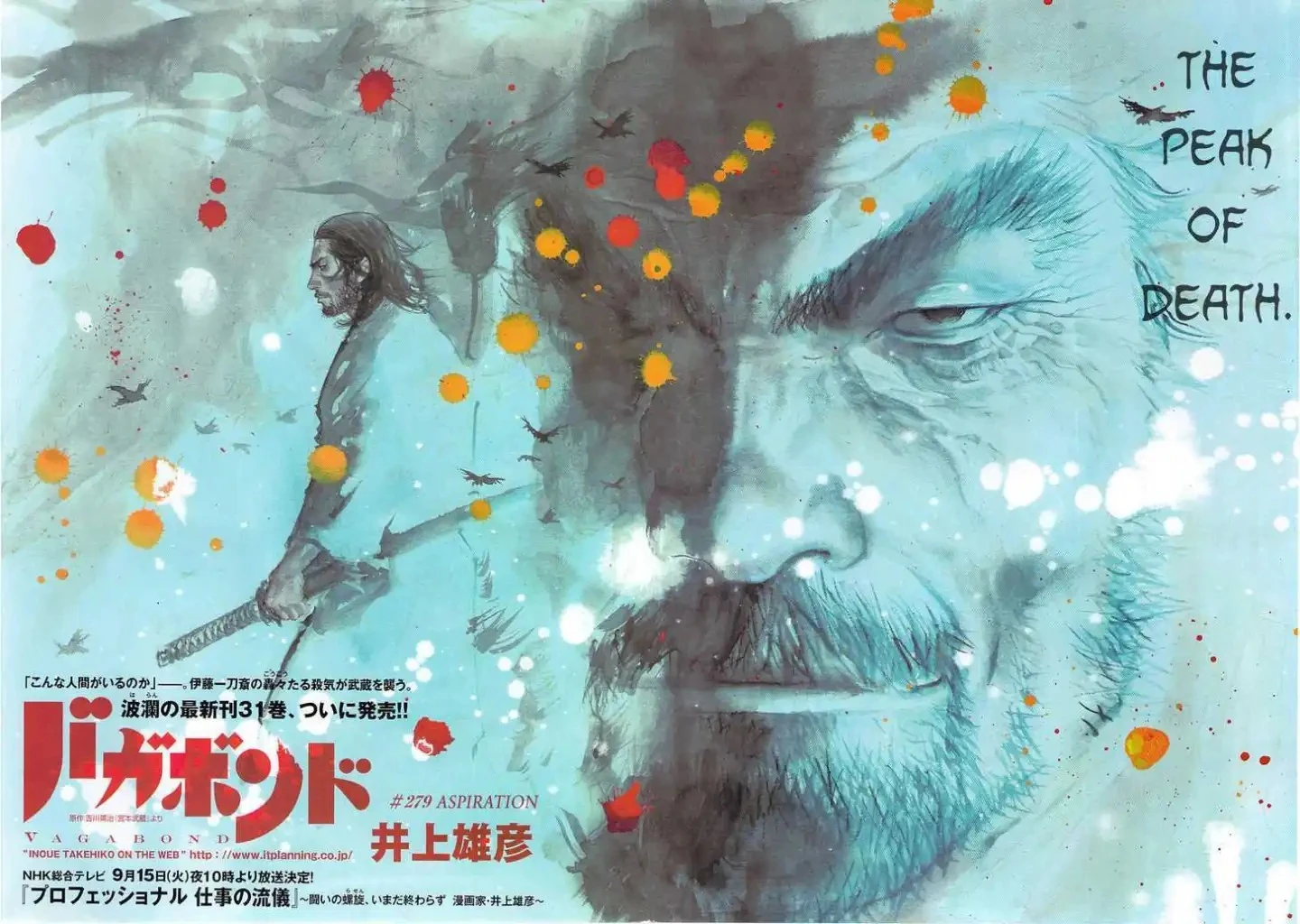
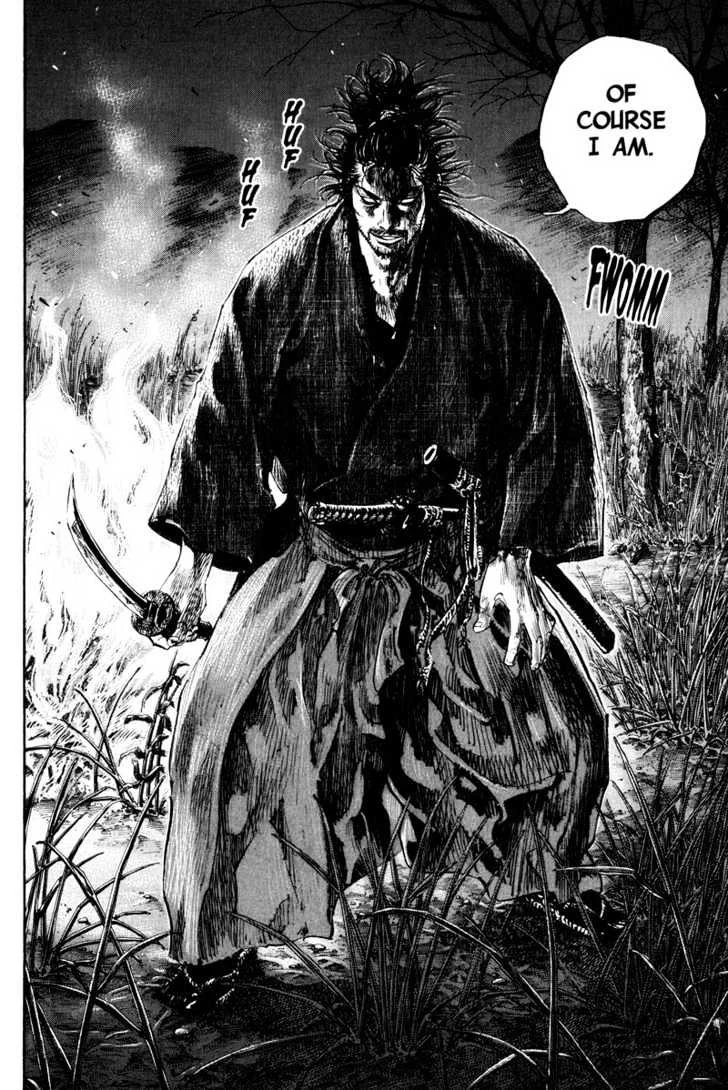
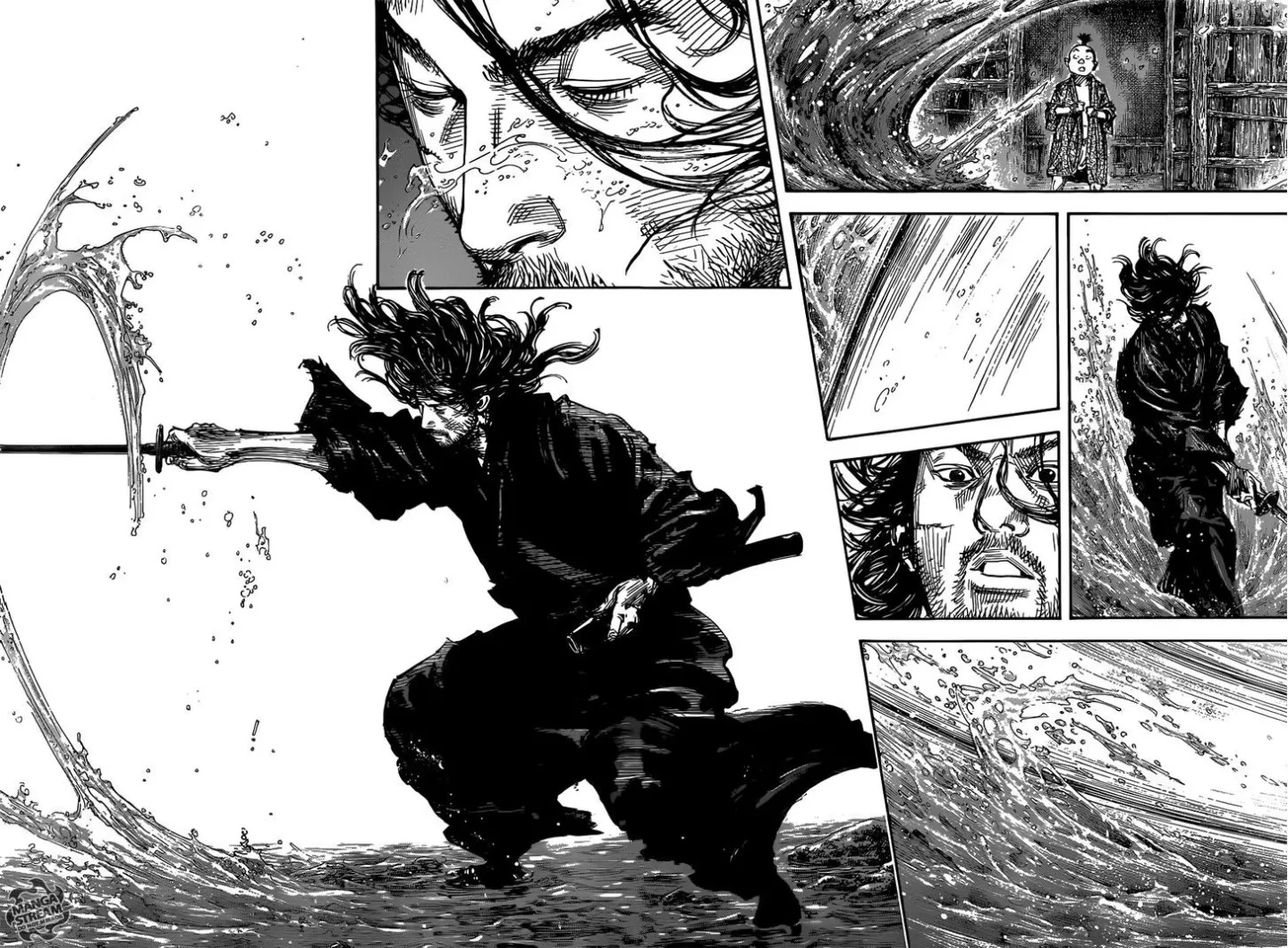
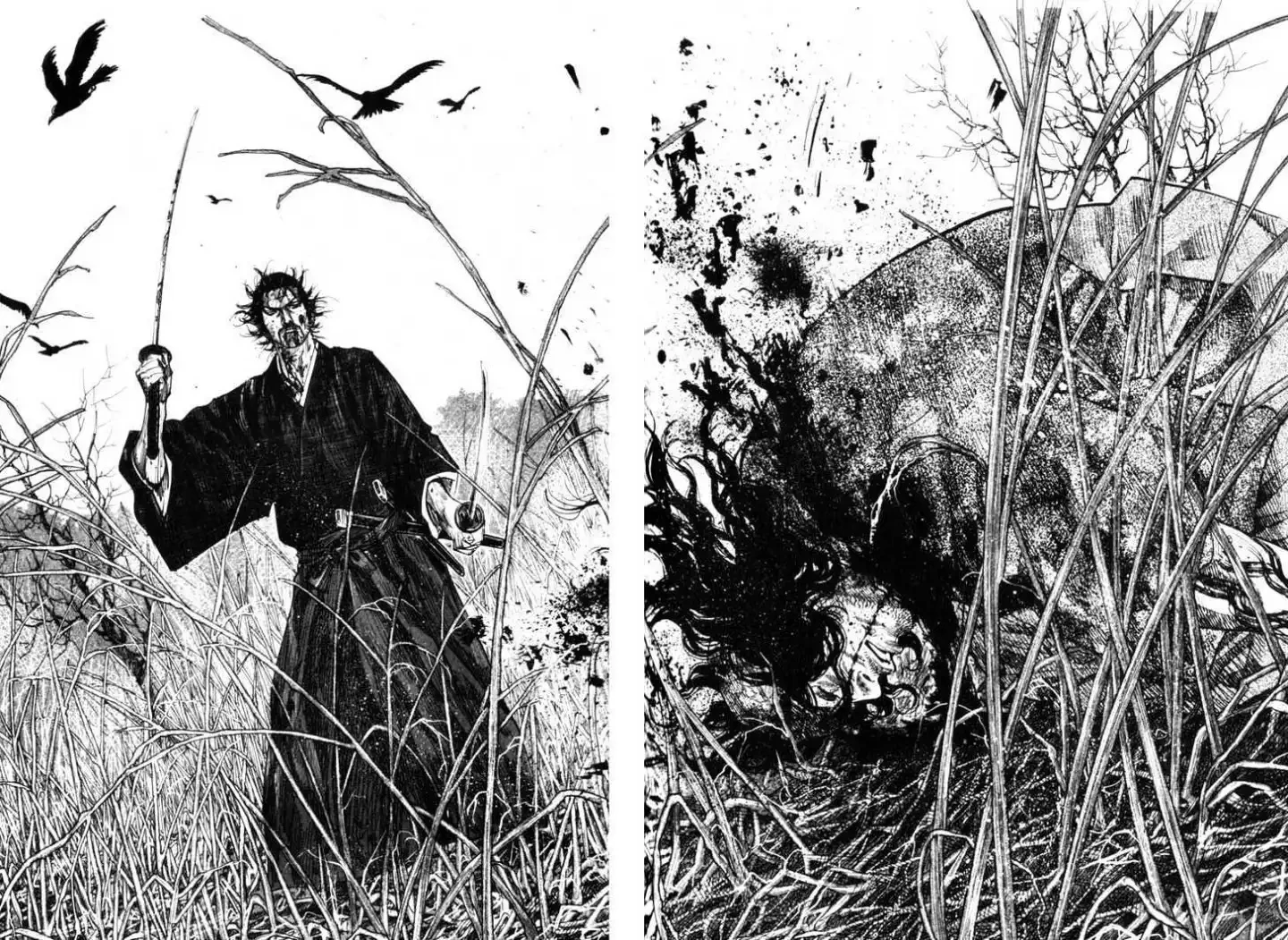
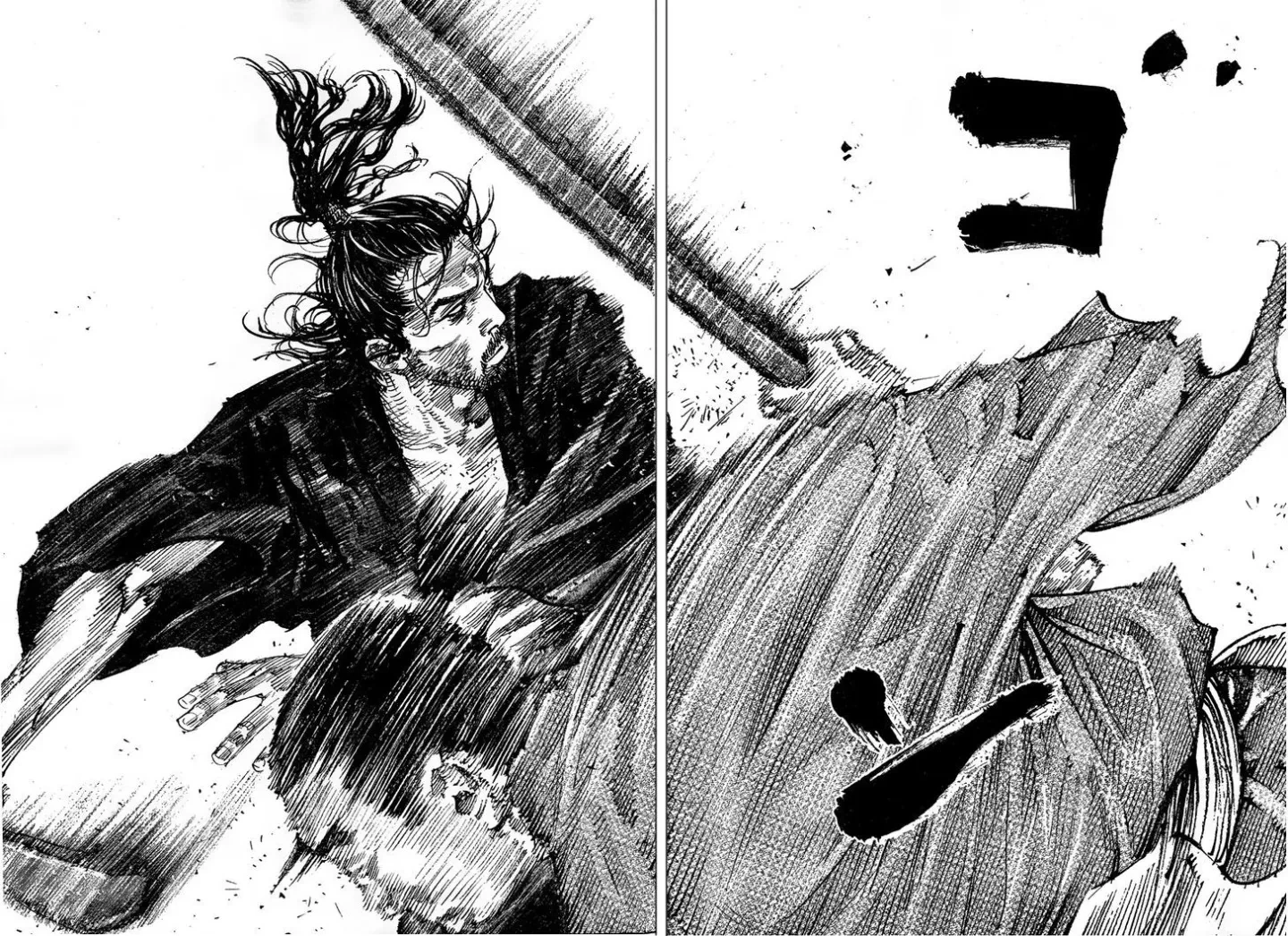
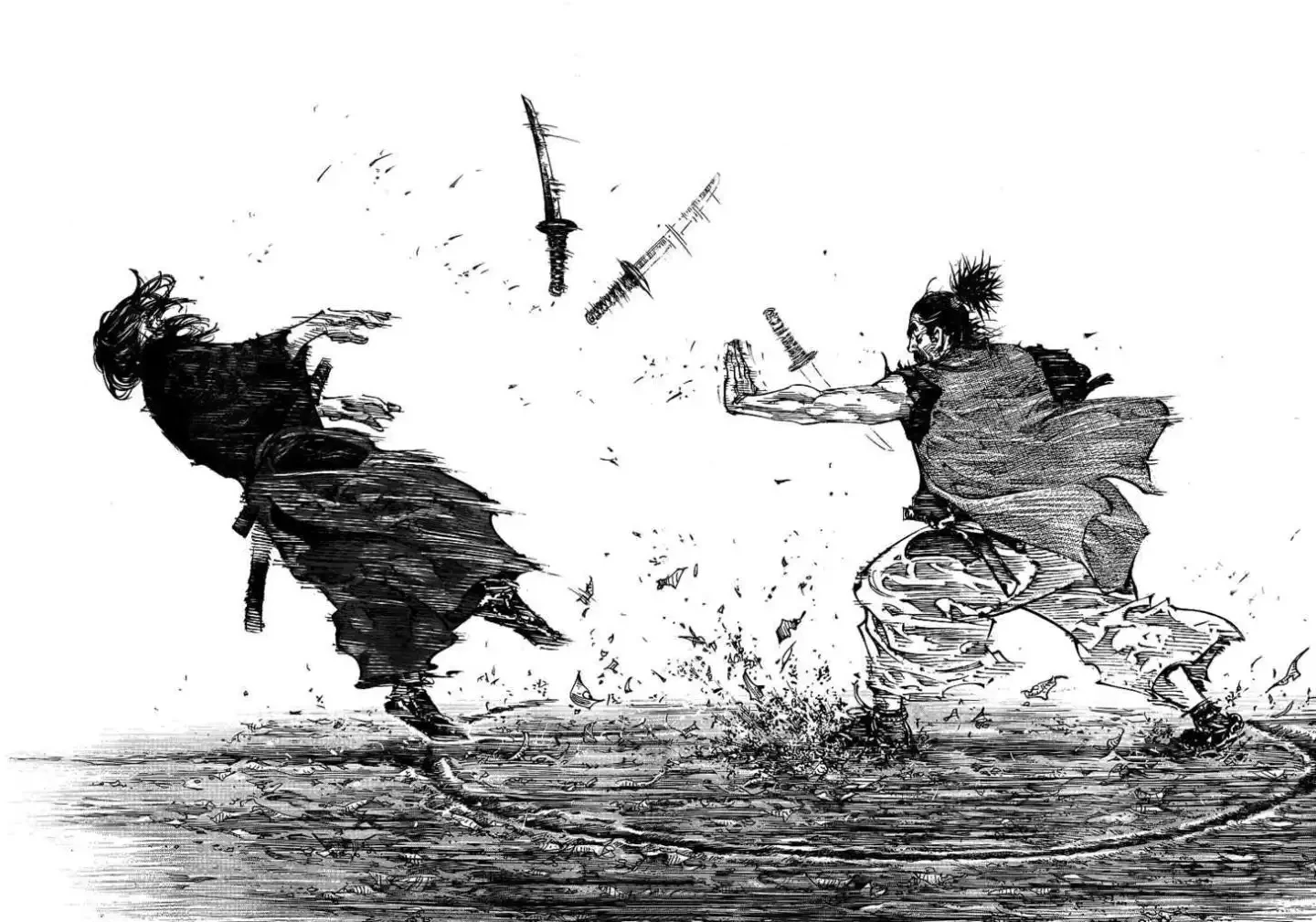
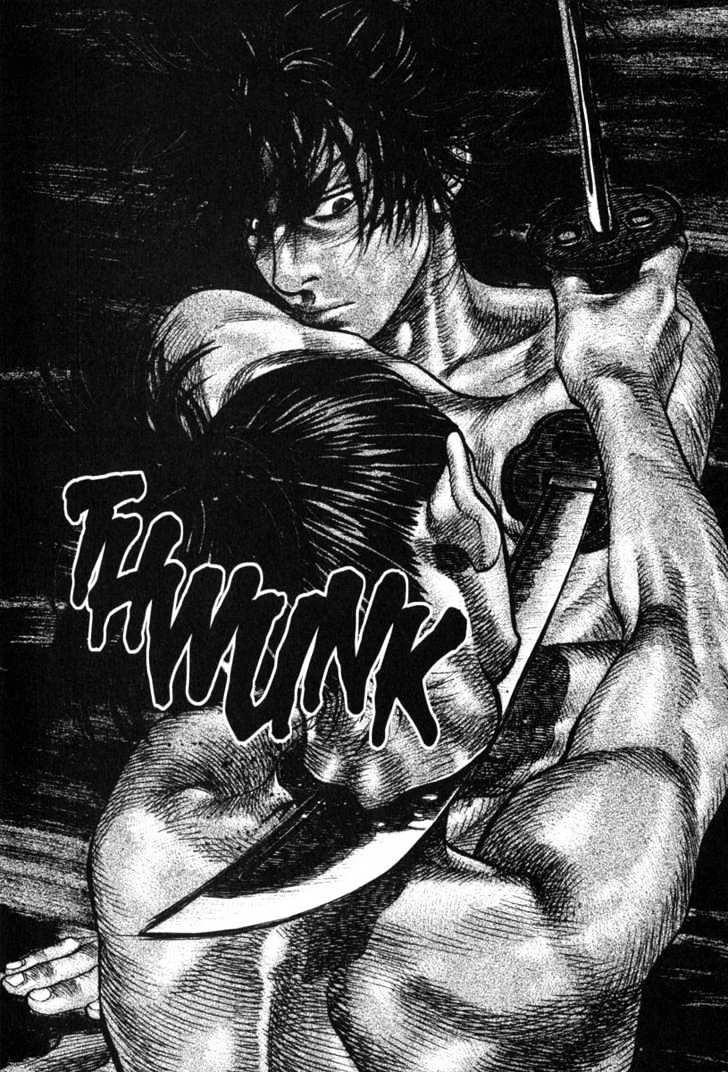
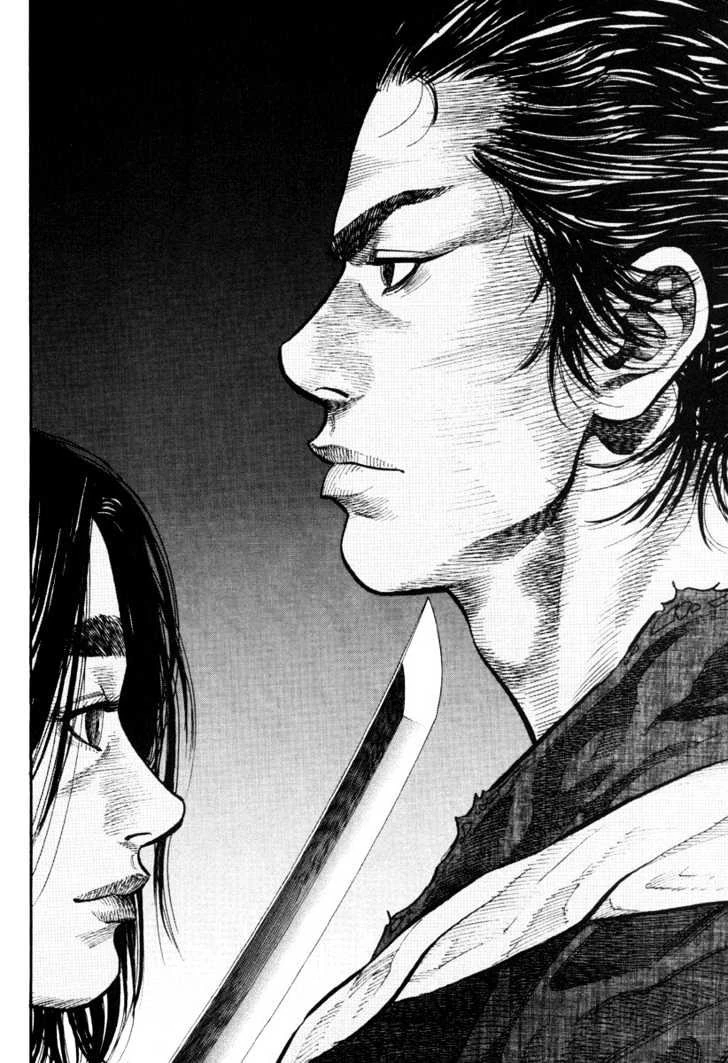
Then there’s the art. Spend a little time with its pages, and the scale of Inoue’s achievement becomes hard to miss.
He moves between brush and pen, remarkably realistic anatomy and lines that feel almost like calligraphy. Silence, empty space, wind, water and nature express what his characters cannot put into words.
In a fight, he doesn’t just draw movement. He draws fear, instinct and the way time seems to stop just before a blow.
It’s no surprise that Vagabond became the centerpiece of a museum exhibition featuring around 140 original works created with ink and brush. The LAST Manga Exhibition opened at Tokyo’s Ueno Royal Museum in 2008.














Alongside Berserk and Vinland Saga
Vagabond has surpassed 82 million copies in circulation worldwide.
That milestone was already reported by Crunchyroll in 2015. Publicly announced milestones for the other two series were over 70 million for Berserk in 2025 and over 7 million for Vinland Saga in 2023.
Impressive, right?
These circulation figures were announced in different years; they aren’t sales totals measured on the same day. Still, they give us a sense of each series’ reach.
The online community ratings are remarkable, too. In the snapshot shared on 29 August 2026:
Ratings shared by the community on 29 August 2026; scores change over time. For current rankings, see MyAnimeList and AniList.
Vagabond is one of the most widely circulated and highly regarded manga of all time. Yet when the conversation turns to collecting, it feels as though it attracts less attention than its artistic standing would suggest.
The market paradox
Despite that stature, the 1999 Japanese first printing of Vagabond volume 1 with its original obi appeared in our community’s comparison of 29 August 2026 at an indicative €100–200.
Copies without the obi can cost considerably less, with condition and completeness making a real difference. If you’re considering a copy, treat those figures as a starting point to check: an asking price is not a completed sale.
In that comparison, Vagabond sat in a similar price range to Vinland Saga, even though the circulation milestones cited were more than tenfold apart.
That gives you something to think about, even if it doesn’t tell us how many first-print copies have survived with their obi intact.
For a first-print volume 1 of Berserk, the range shown was €1,000–2,000. Depending on the copies being compared, that gap can exceed ten times the price.
Part of the difference makes sense. Berserk is older, has had several adaptations and enjoys enormous recognition beyond its readership. Its first volume dates back to 1990.
An author’s death can also renew interest in their work. But attributing a price increase to the deaths of Kentaro Miura or Akira Toriyama would require a documented comparison of sales.
Even so, the gap is interesting.
We’re comparing Berserk with a series that has surpassed 82 million copies in circulation, won some of the industry’s most prestigious awards and earned an extraordinary reputation among readers.
Vagabond doesn’t seem undervalued as art. But it may be underappreciated by the collecting market and less visible in the wider media.
Two things have clearly limited its visibility:
- it has no anime adaptation;
- it has been on hiatus for years and still has no ending.
Pascal Charrue, co-founder of Fortiche — the studio behind Arcane — named Vagabond as the first manga that came to mind when asked what he would like to adapt, in a July 2024 interview. That is an expression of admiration, not an anime announcement.
Meanwhile, the community is still waiting for the story to reach its conclusion.
Inoue has said that Vagabond isn’t finished and that he would like to return to drawing it, as recorded in the interview included in The First Slam Dunk press kit. The official Morning page still lists it as an ongoing series, but that listing is not a return date.
Where does that leave us?
Vagabond doesn’t need to “become the next Berserk”.
In quality, awards, reach and reputation, it already belongs at the same table.
Its market value, though, may not fully reflect that standing.
The market for manga first editions still feels young compared with other collecting fields. Attention tends to cluster around the biggest names, supported by anime, films and widespread media exposure.
As more collectors join in and knowledge grows, the market can become more discerning. We start looking more closely at print runs, obi, condition, historical significance and the work itself.
That’s how some gaps between recognition and price might begin to narrow.
Vagabond has nothing left to prove artistically. It’s an acclaimed, award-winning masterpiece, with more than 82 million copies in circulation already documented in 2015 and ratings close to Berserk in the comparison above.
Its relative accessibility to collectors may owe something to lower media exposure, the lack of an anime and uncertainty over its ending, rather than any lack of importance. That’s one possible interpretation, not a proven explanation of its prices.
If the market keeps growing, more collectors may start looking beyond the names that have already taken off, rediscovering works whose historical importance may not be fully reflected in their prices.
A return to publication or an anime adaptation could speed up that process. Neither would guarantee a rise in value.
But here’s the part that matters most:
Vagabond doesn’t need to suddenly become a masterpiece.
It already is one.
The question is whether — and when — the market will catch up.
Sources and further reading
- Kōdansha / Morning — Vagabond: the series, its creators and serialization.
- Japan Media Arts Festival and Asahi Shimbun: the awards of 2000 and 2002.
- FLOWER — The LAST Manga Exhibition: the exhibition and original artwork.
- Crunchyroll, 2015, Hakusensha, 2025 and Kōdansha, 2023: circulation milestones for Vagabond, Berserk and Vinland Saga.
- Pascal Charrue interview, 2024 and The First Slam Dunk press kit, 2023: comments on adaptation and continuation.
- Hanmoto — Vagabond volume 1: March 1999. A commercial release date does not verify the colophon date of an individual copy.
- Colophon of the photographed copy: 1999年3月23日 第1刷発行, 23 March 1999, first printing.
- Prices and ratings: First Printing Manga’s community comparison shared on 29 August 2026. The ranges for ungraded copies are indicative, rather than a verified set of completed sales. Obi status follows the community’s curatorial classification.